Cyber Scams Becoming Increasingly Convincing: Losses in Serbia Exceed RSD 187 Million
A fake traffic fine, a package supposedly awaiting delivery, or a message from a bank demanding an urgent response: a single click can lead to a cyber scam. In 2025, the financial losses recorded in connection with cyber incidents reported to the National CERT exceeded RSD 187 million.
Scammers are increasingly using the names of well-known institutions and public enterprises to obtain citizens’ personal data or money. Among the most common forms of abuse are fake messages impersonating the Post of Serbia, Roads of Serbia, the Ministry of Interior, or the Office for IT and eGovernment.
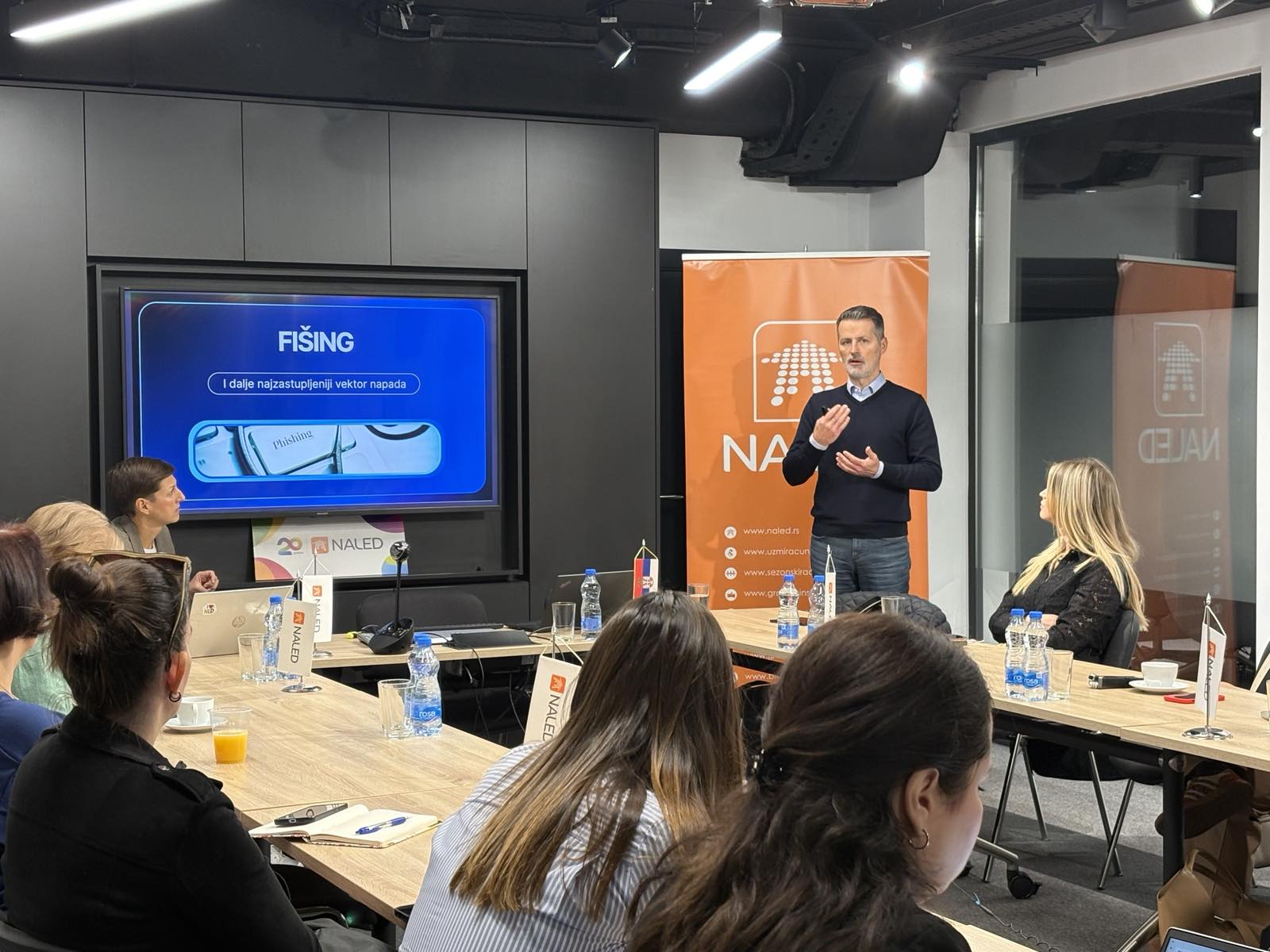
These threats were highlighted by Jovan Milosavljević, a representative of the National CERT of the Republic of Serbia, which operates within RATEL, at a workshop for journalists organized in cooperation with NALED.
Phishing, or sending fraudulent messages and links, remains one of the most common methods used in scams. Scams via WhatsApp, fake cryptocurrency investment offers, and messages created with the help of artificial intelligence are also becoming increasingly common.
Thanks to AI tools, fraudulent messages are becoming more convincing and harder to recognize. They often trigger fear or a sense of urgency to persuade users to click on a link, disclose their personal information, or transfer money without verifying the source.
“Cyber scams are becoming increasingly sophisticated, and attackers are more frequently abusing the names of institutions and companies that citizens trust. It is particularly important to pay attention to messages that create a sense of urgency and prompt users to immediately click on a link or disclose their personal and financial information. We therefore advise citizens to always verify the source of a message, avoid opening suspicious links, and check any doubts through official channels. Timely recognition and reporting of incidents are important steps in protecting against cyber threats,” said Jovan Milosavljević of Serbia’s National CERT at RATEL.
According to National CERT data, the number of reported cyber incidents increased from 519 in 2022 to as many as 1,759 in 2025. At the same time, reported financial losses rose from more than RSD 8 million to over RSD 187 million. The figures cover reported cyber incidents, not just scams targeting citizens.
“Cybersecurity is not just a matter of technology. It is a matter of everyone’s safety, including citizens, businesses, and institutions. Together with the National CERT, NALED has been working for years to help citizens, businesses, and public administration become better prepared for cyber threats. We organize training sessions and help people recognize risks, protect their data, and know how to respond,” said Tamara Bresjanac of NALED.
She emphasized that journalists are a particularly important target group for cybersecurity education, as they play a vital role not only in protecting their own data but also in sharing reliable information with citizens.
“It is important for journalists to know how to protect themselves, but also how to provide citizens with clear, accurate, and useful information. Together, we must learn how to recognize cyber scams, how to prevent them, and what to do if an attack occurs. Our message is simple: recognize the threat, protect your data, and act in time,” Bresjanac said.
Experts advise citizens not to open unverified links, not to enter payment card details on suspicious websites, and to verify any unexpected message from a bank or institution through official channels. A single misspelled character in a web address or a message urging you to make an immediate payment may be a sign of fraud.
Citizens can report suspicious messages and attempted cyber scams to the National CERT via its website: www.cert.rs.