Serbia and Croatia Develop a Joint Food Donation Platform
Serbia generates around 3.18 million tonnes of municipal waste annually, while Croatia produces approximately 1.7 million tonnes. A significant share of this waste consists of garden and other biodegradable materials, including food surpluses and food waste. Part of these surpluses remains safe for human consumption and can be donated, while the remaining waste can be used for energy production.
This is the objective of the new cross-border project “Waste and Food Residues to Alternative Value for Energy – WAVE”, implemented by NALED in partnership with the City of Šabac and Future Systems Hub from Serbia, as well as the City of Otok and the EU Center association from Croatia. The project is co-financed by the European Union under the Interreg VI-A Croatia–Serbia Programme.
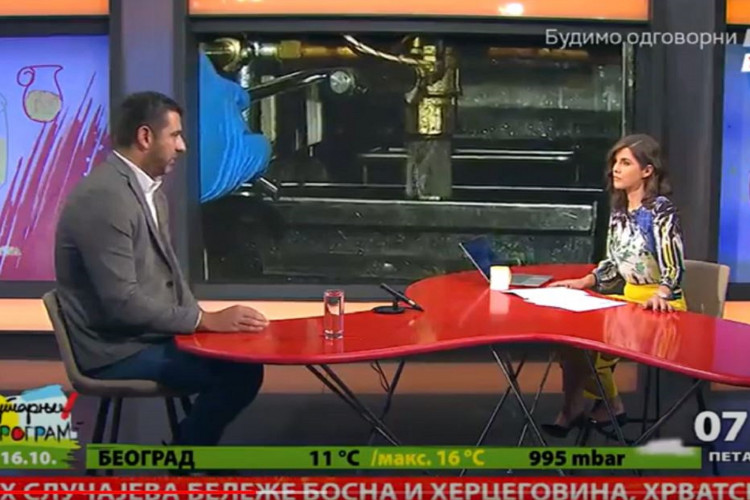
“Within the project, we will fully pilot this system in the City of Šabac and the City of Otok in Croatia, with the aim of creating a platform that will first be used for donating surplus food as the primary step in preventing waste generation. After that, waste from agriculture, the HoReCa sector, and households will be systematically collected. We have indications that Serbia may introduce a long-awaited amendment to the VAT Law, exempting food donations from VAT. This would encourage both retailers and food producers to increase donations to those who need them most,” said Slobodan Krstović, Director of Sustainable Development at NALED.
The digital platform will be designed for agricultural producers, food distributors, hotels, restaurants and catering companies, humanitarian organizations, public utility companies, and local governments in Šabac and Otok. Users will enter information about expected surpluses, the type and quantity of food, and its location, while the system will automatically connect them with potential buyers, donation centers, or facilities capable of processing waste into biogas.
Based on the data provided by producers, the platform will also generate a seasonal calendar of available surpluses, enabling buyers and processors to plan procurement more effectively. Small-scale producers will be able to consolidate deliveries and organize transportation jointly, reducing logistics costs. The project also envisages a simple digital marketplace for the sale of second-grade agricultural products that are safe for consumption but often remain unsold due to appearance or other market-related criteria.
The platform will therefore cover the entire journey of surplus food—from sale and donation to the separate collection of materials no longer suitable for human consumption and their redirection toward energy production. It will be mobile-friendly, available in both Serbian and Croatian, and equipped with detailed guidance tailored to users with varying levels of digital literacy. Citizens will be able to track the quantities of collected waste, its conversion into renewable energy, and its contribution to reducing carbon dioxide emissions.
The project also includes the procurement of a specialized biomass collection vehicle in Šabac. Collected bio-waste will be transported to an existing pasteurization and fermentation facility, where it will be used for biogas production. In Otok, the municipal utility company will organize separate collection, and at least two composters are planned for procurement. The resulting compost will be used to maintain public green areas and will also be made available to local agricultural producers.
In both cities, used cooking oil will be collected separately, as it can serve as a feedstock for biodiesel production. The project will also explore the possibility of using kitchen waste and other suitable biomass residues to produce bioethanol, while mixed organic waste can be processed into biogas and other forms of bioenergy. In this way, the use of waste will be determined according to its composition: safe food will be directed to people in need, used cooking oil to biodiesel production, and organic residues to fermentation, biogas production, or composting.
The pilot phase will involve at least 100 households in both Šabac and Otok. These households will receive containers for the separate collection of food waste and used cooking oil. Equipment will also be provided to up to five selected HoReCa establishments preparing more than 50 meals per day.
Photo Credits: Shutterstock