Local Action, Regional Impact: How Municipal Cross-Border Cooperation Drives Energy Transition
The energy transition is a local challenge with regional impact. Municipalities in the Western Balkans stand at the forefront of this transformation, managing public buildings, infrastructure, and services that directly shape energy consumption and emissions. Many had already implemented energy projects, yet potential remained to build on their knowledge and expand efforts.
This is where the Municipal Cross-Border Cooperation for Local Energy Transition in the Western Balkans (MCBC WB6) project (Dec. 2024 - Sep.2026) played a pivotal role. Commissioned by the German Federal Foreign Office and implemented by the German Energy Agency (dena), MCBC WB6 aimed to strengthen the capacities of municipal actors in the Western Balkans, enabling them to drive the energy transition with their own resources, while fostering cross-border cooperation and supporting the region’s EU accession process. [GS1.1]
MCBC WB6’s mission aligns with the EU Green Deal’s 2050 carbon neutrality goal, reinforced through the Berlin Process. At its core, MCBC WB6 contributes to accelerating the global energy transition to achieve the Paris Climate Goals and enhancing energy security by reducing fossil fuel dependence.
Central to MCBC WB6’s approach is an inclusive energy transition, actively engaging women, marginalized groups, and all community members in shaping energy initiatives. Women’s leadership brings unique perspectives and drives innovation, while the participation of marginalized groups ensures that solutions are equitable and address all citizens’ needs. Municipal cooperation further amplifies these efforts, creating a network of shared knowledge and mutual support.
From a Problem to a Project
A municipality may know that its public buildings require energy renovation, that its heating system needs modernization, or that there is potential for renewable energy production. However, turning this need into a viable project requires additional steps: defining the problem, identifying possible solutions, finding partners, locating appropriate funding opportunities, and building the capacity needed to prepare and implement the project. This is where cooperation and knowledge exchange between local self-governments can play an important role. A solution that has already been tested elsewhere may provide inspiration, reduce uncertainty, and help a municipality assess what could work in its own local context.
Finding the Right Opportunities
Funding opportunities are often fragmented across programs, institutions, and government levels. Local governments benefit from having access not only to information about funding calls but also to partners, good practice examples, and contacts that can help them develop their ideas. This requires moving from a reactive approach, waiting for a suitable call to appear, toward a more proactive approach where municipalities continuously develop and maintain a pipeline of projects.
The pathway can be simple: Identify the need → Define the problem → Explore solutions → Find partners → Identify funding → Develop the project → Move to implementation.
The Power of Partnerships
Energy transition projects rarely fit within the boundaries of a single institution. Municipalities may need to collaborate with national authorities, energy companies, research institutions, private-sector partners, neighboring municipalities, or international organizations. Regional and cross-border cooperation can expand these possibilities. Connecting municipalities facing similar challenges creates opportunities to exchange knowledge, identify common solutions, and potentially develop joint initiatives. The experience of cooperation among local governments across the Western Balkans shows the value of creating spaces to share not only successful projects but also problems, ideas, and lessons learned. A municipality does not always need a ready-made solution. Sometimes, knowing that another municipality has faced a similar challenge, and knowing who to contact about it, is the first step toward solving it.
Building Capacity, Sharing Knowledge, and Developing Projects
The MCBC WB6 empowered municipalities through workshops, technical assistance, and peer-learning networks. In collaboration with local experts like NALED, we addressed a wide range of topics, including local energy transition and climate action planning (SECAP/LEAP), energy efficiency in municipal infrastructure, renewable energy systems, smart energy systems, financing, institutional development, and regulatory guidance. By equipping local teams with these knowledge and insights, we supported them to take ownership of their energy future, cooperate with stakeholders, and drive their projects. This directly supports our goal of enabling independent project development, establishing sustained cooperation structures, and increasing the visibility for cross-border cooperation.
Collaboration and Inclusivity Drive Change
Cross-border cooperation works - but only when needs and offers are well communicated and identified. Establishing long-term partnerships through regular, moderated dialogue is key, while highlighting commonalities, such as mutual learning and the economic benefits of collaboration, builds resilience and regional stability. Bi- and trilateral formats, tailored to specific challenges and support needs, further strengthen these ties. Joint initiatives, such as shared renewable energy projects or regional training programs, reduced costs, shared risks, and accelerated implementation, enabling municipalities to achieve more together than they could alone.
Local ownership thrives when connected to broader systems. Sustainable change happens when municipalities take the lead, but linking local activities to the national level through regulatory recommendations and direct communication with decision-makers further amplifies impact. Prioritizing innovation and capacity building empowers municipalities to lead their energy transitions.
Flexibility and adaptability are essential. Every municipality is unique, with its own regulatory environment, community priorities, and energy needs. Tailoring our support to these local contexts ensured that our assistance was relevant, practical, and impactful.
Connecting Local Efforts to Regional Goals
The MCBC WB6 demonstrates that the energy transition is as much about collaboration and inclusivity as it is about technology. In the Western Balkans, cross-border cooperation is essential: municipalities face similar energy challenges and can achieve more together—by sharing expertise, pooling resources, and accessing joint funding to align with European climate goals. This builds regional ties and creates resilient, sustainable energy systems.
The Path Forward: Scaling Local Success
The energy transition will be won or lost at the local level. MCBC WB6 has shown that when municipalities are equipped, connected, and empowered inclusively, they can transform the energy transition from a distant goal into a tangible reality. The question is no longer 'What do we need?' but 'What can we achieve together?'
Related Content

Active Customer – An Opportunity for Businesses
When we talk about the energy transition, the focus is usually on new power plants, renewable energy sources, and reducing emissions. Less...Read more
Local Cooperation as a Driver of the Energy Transition
When we talk about the energy transition, we usually focus on large power...Read more
The energy transition of the region starts locally
20.06.2025
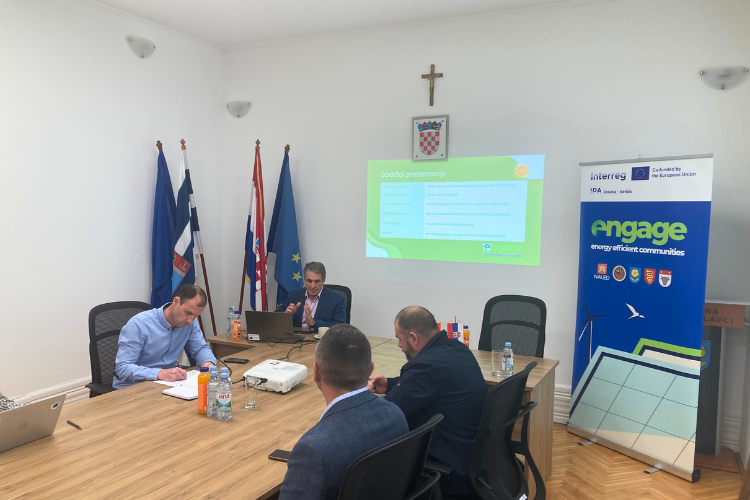
Three meetings, one common goal - the creation of energy communities that will promote the use of renewable resources in Serbia and Croatia...Read moreThis website uses cookies to ensure the best user experience. By continuing to browse the site, you consent to the use of cookies.
CONTINUE LEARN MORE