Negative electricity prices to be introduced on the Serbian power exchange from May 5
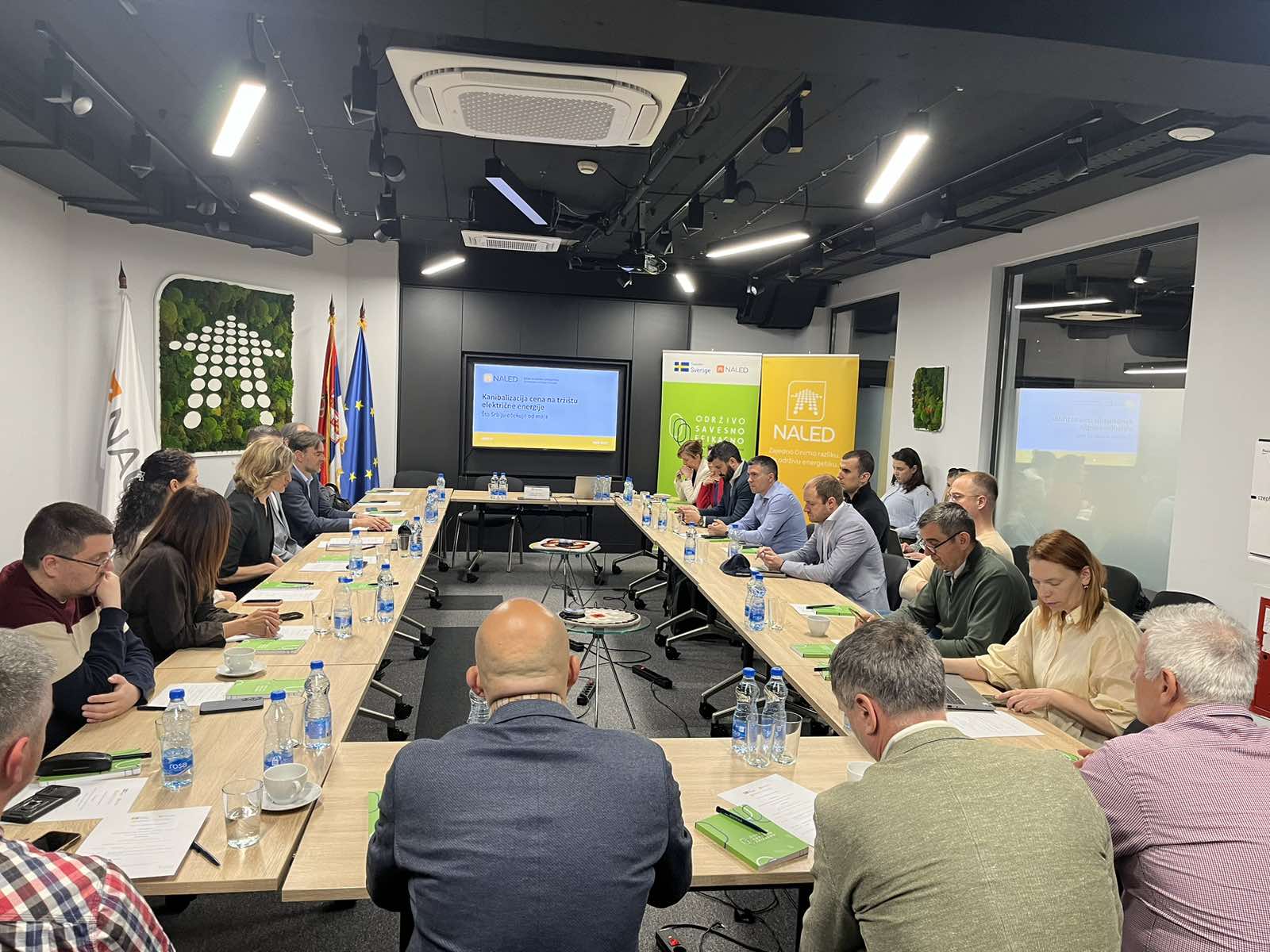
Starting May 5, negative electricity prices will be introduced for the first time on the Serbian power exchange SEEPEX. These prices occur during certain hours when generation from solar capacity exceeds demand. With the expansion of renewable energy sources, Serbia’s energy system is undergoing rapid transformation, signaling the need for new market mechanisms such as long-term Power Purchase Agreements (PPAs), further development of battery energy storage systems (BESS), and investments in data centers, as stated at the session of the NALED Sustainable Energy Council.
Negative prices are not a new phenomenon in European markets. They arise from limited system flexibility and insufficient development of storage capacity and demand-side management, particularly during periods when renewable generation surpasses consumption.
– Regarding the introduction of negative pricing in Serbia, which has already been in effect in other market segments since the beginning of the year, this is neither unexpected nor novel. It is a necessary step to align our market model with the pan-European market framework applied in the EU, and a prerequisite for operationally initiating market coupling. Notably, in the first quarter alone, the SEEPEX day-ahead market recorded 69 hours with zero prices, compared to just 8 hours in the same period last year. Combined with the dramatic widening of the spread between Serbian and Hungarian spot market reference prices, this clearly indicates not only the persistence of this phenomenon across European spot markets, but also serves as a serious warning signal of market distortion resulting from the implementation of the CBAM mechanism, which has been fully applied since January 1 this year – said Miloš Mladenović, CEO of SEEPEX.
According to him, the market is expected to stabilize to some extent, although similar trends are likely to continue throughout the year. If a solution is not found—specifically, an exemption from the application of CBAM to the Serbian electricity market—it will be very difficult to ensure a stable investment framework for further renewable energy deployment, including the conclusion of long-term PPAs.
– Negative prices are not inherently a problem. They indicate that there is excess electricity in certain hours and send a signal to generators, including EPS, that new business models must be explored. This particularly վերաբers to PPA structures, fixed-price arrangements, and the treatment of imbalance settlement. In the next two to three years, we expect significant electricity surpluses, and if the CBAM issue remains unresolved, this could become a major challenge. EPS already has signed PPAs, and we will need to carefully define how negative prices will be treated in practice – emphasized Davor Pupavac, Director of Market Analysis and Risk Management in Electricity Trading at EPS.
Members of NALED’s Sustainable Energy Council assessed that investors will adapt to the new conditions, but risks can no longer be predominantly borne by producers. More flexible contractual frameworks are needed, along with greater involvement of financial institutions in risk-sharing, further development of battery storage, demand-side management, and stronger public-private sector cooperation.
– Our goal is to increase green energy generation, and in the future this will create opportunities for lower-cost electricity, innovative technologies, and new business models. At the same time, the question remains how quickly we are ready to develop system flexibility. This marks an important step toward the liberalization of the domestic electricity market and deeper integration into European energy flows, but it is crucial to be prepared for this transition. The Sustainable Energy Council will therefore continue to support an efficient energy transition and will prepare an analysis with recommendations on the conditions for battery deployment, given that this is one of the market instruments whose role in system stability was highlighted multiple times during today’s session – concluded Jasmina Radovanović, Senior Advisor for Assets and Investments at NALED.