The first public database of social enterprises is coming soon
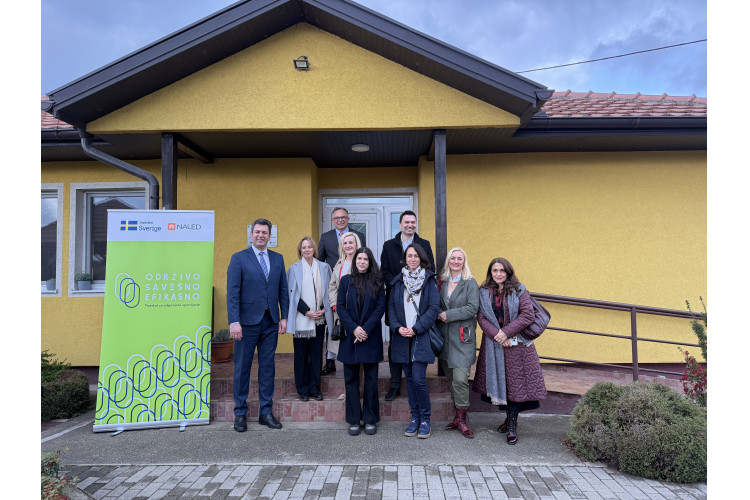
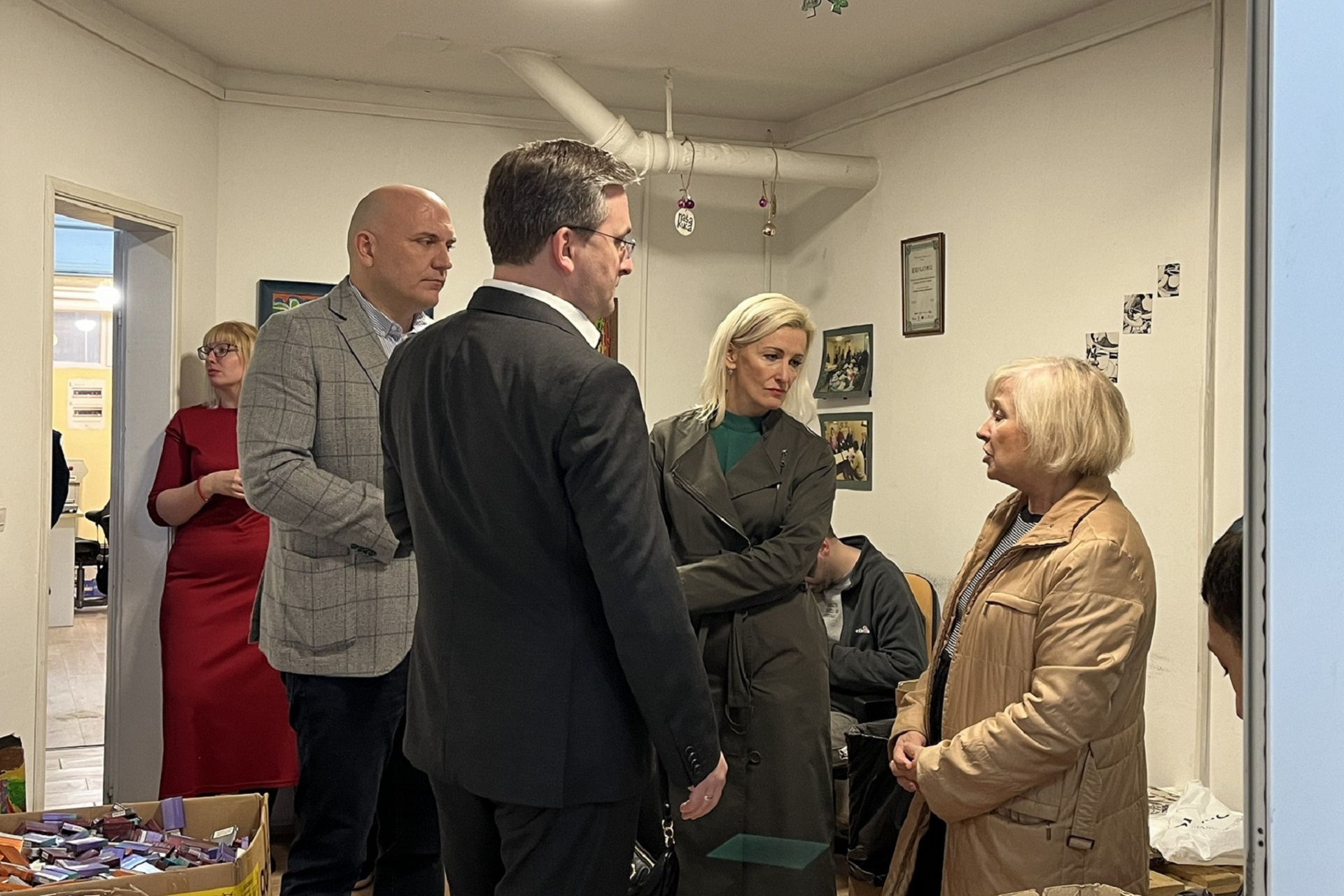
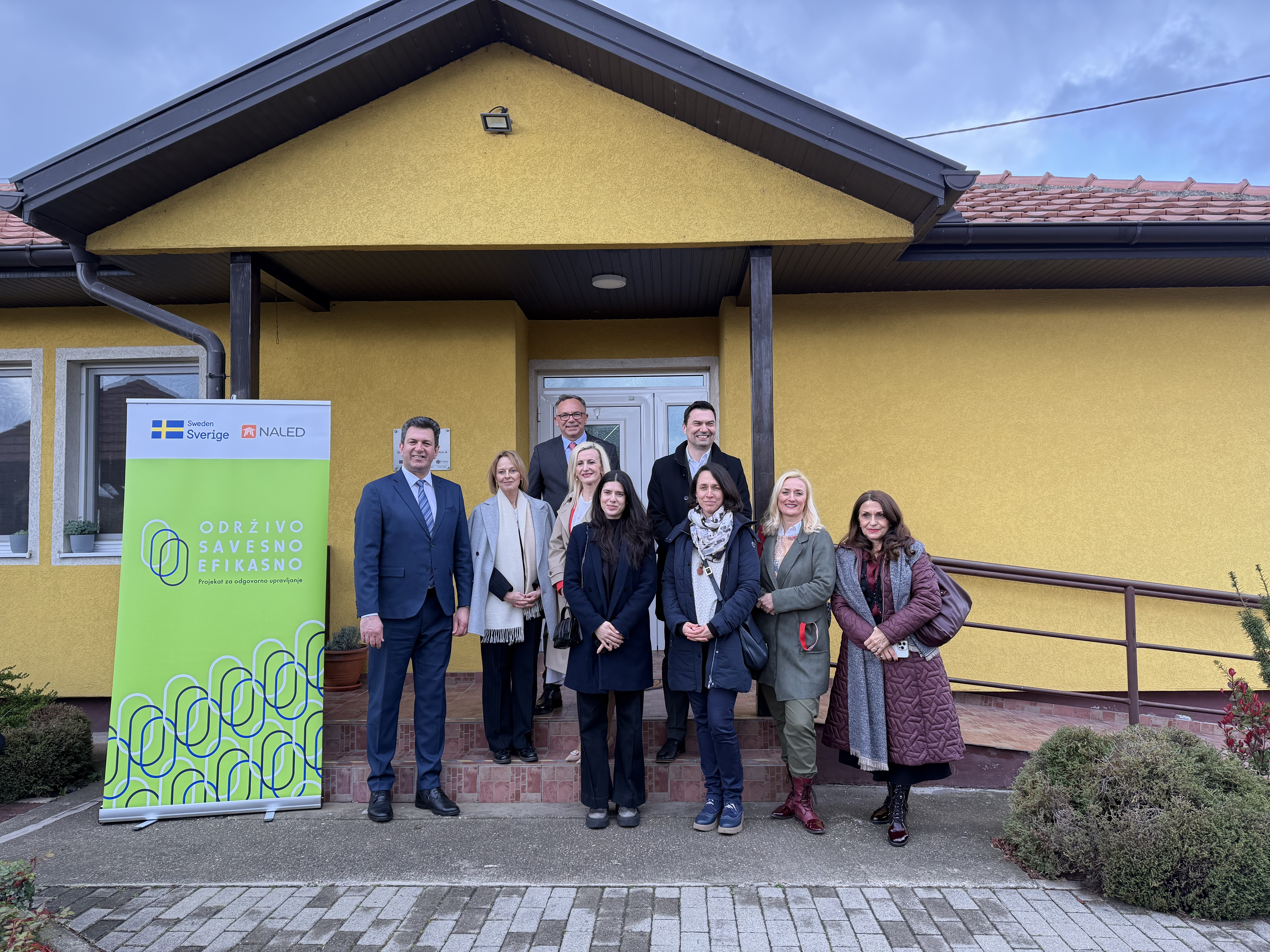
The first database of social enterprises will soon be publicly available and easy to search. Its goal is to bring together all relevant information in one place – where these enterprises are located, what they do, whom they employ, what kind of social impact they generate, and what their key needs are. This was announced during a visit to social enterprises in Šabac and Bogatić as part of the campaign “Social Entrepreneurship – An Opportunity for All (and the World)”, organized by NALED.
The campaign aims to promote and strengthen this sector and is part of the project “More Efficient Public Procurement and Sustainable Supply Chains for Good Governance”, implemented by NALED with the support of the Government of Sweden.
During her work, H.E. Charlotte Sammelin, Ambassador of the Kingdom of Sweden to Serbia, has visited numerous social enterprises in Sweden, and expressed great pleasure at seeing what Šabac has achieved and how much progress it has made in this field. She emphasized that efforts to strengthen social inclusion must continue, as people from vulnerable groups should be fully included in the everyday life of the community.
The Mayor of Šabac, Aleksandar Pajić, stated that the recent ranking of Šabac among the best cities to live in Serbia confirms the city’s long-standing commitment to improving the quality of life for all citizens. He noted that one of the key reasons for such a high position lies in the strong support for social enterprises, as well as the fact that the city allocates as much as 7% of its budget to social protection. He added that the city’s vision is for Šabac to be a place of equal opportunities, where everyone has the chance to fully realize their potential.
NALED Executive Director Violeta Jovanović explained that although only around twenty social enterprises have currently registered their status with the Serbian Business Registers Agency (APR), estimates suggest that there are significantly more that have not yet formalized their status, as doing so would currently bring them only additional obligations. She added that this is why NALED advocates for the adoption of a Social Entrepreneurship Development Programme, including concrete support measures and incentives that would help social enterprises formalize. She also pointed out that Šabac represents an example of good practice and a local government that supports the solidarity economy sector, which is why the city was chosen to announce upcoming activities. She emphasized that NALED’s role is to connect social enterprises, local governments, and responsible businesses in the effort to integrate vulnerable groups.
Miroljub Nikolić, representing the Courtyard of Sustainable Development, highlighted that cooperation with local government is crucial for the sustainability of their services, but also stressed the importance of a broader ecosystem, including support from companies and organizations such as NALED and Smart Kolektiv, which contribute to the development of the social entrepreneurship sector. He concluded that the Courtyard of Sustainable Development is a good example of how these enterprises can be market-competitive and sustainable, combining social protection and entrepreneurship, and enabling people with developmental disabilities to spend their day productively and, through dignified work, create products that can be sold, which is the goal of any entrepreneurial venture.