How Serbian Businesses Can Win Online Customers and Expand into Foreign Markets
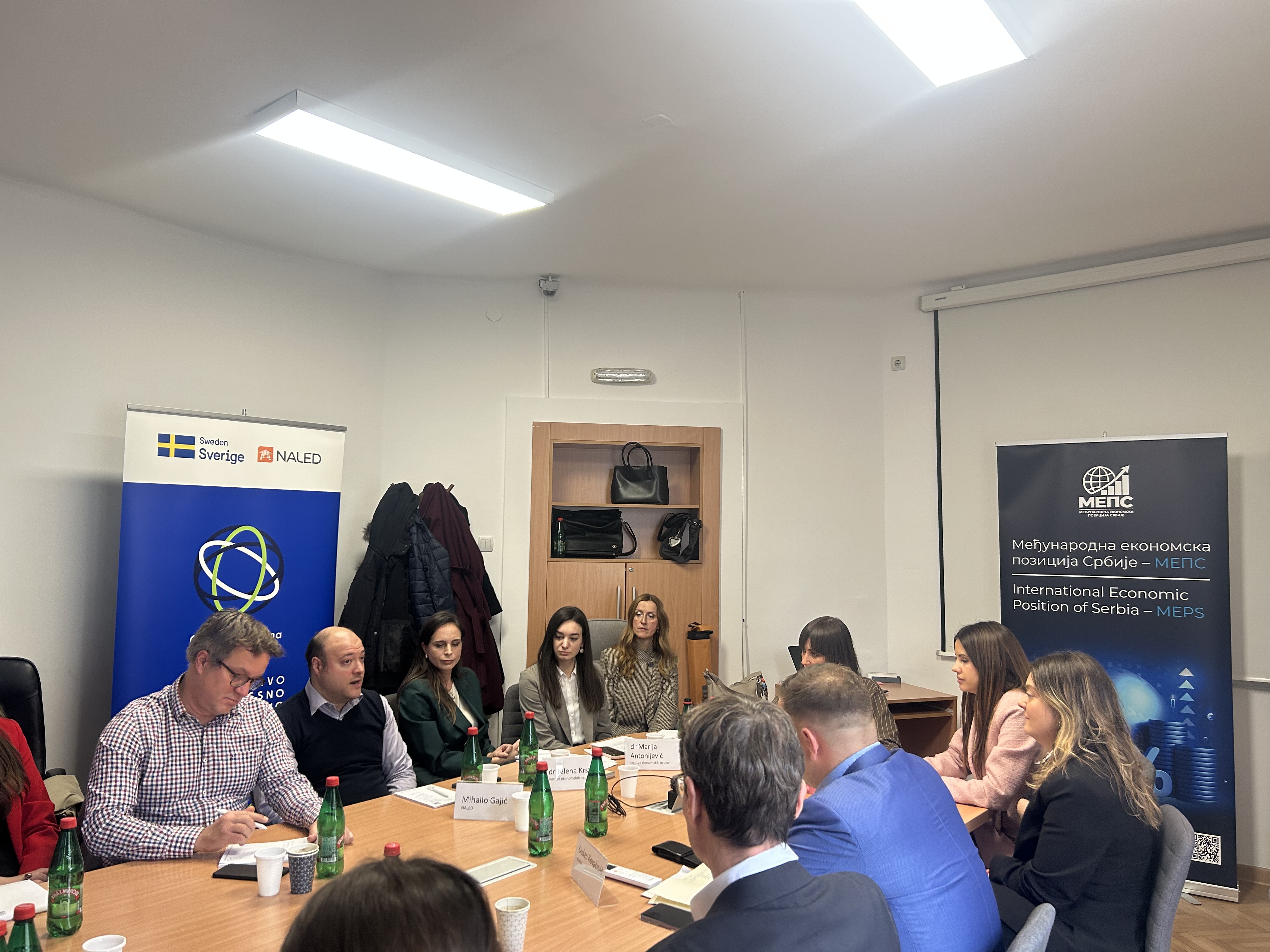
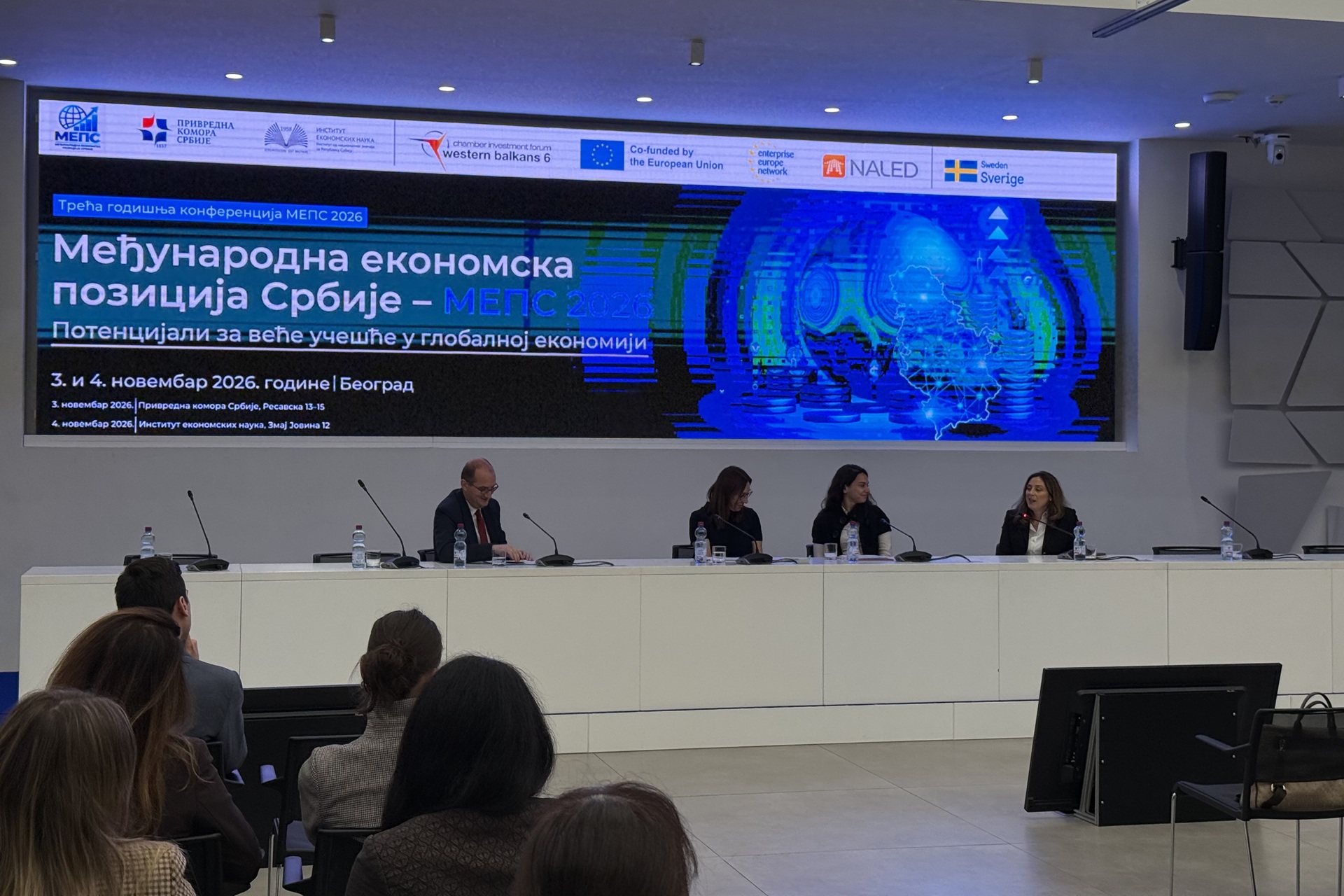
Citizens in Serbia are increasingly shopping online, but domestic small businesses still face challenges in attracting and retaining customers, as well as expanding into foreign markets. These issues were discussed at the panel “Online Shopping and the Global Market: Serbia’s Competitiveness in the Digital Economy”, held as part of the conference Serbia’s International Economic Position – 2026.
Mihailo Gajić, Head of Research and Analytics at NALED, pointed out that consumers’ lack of trust in online payments remains one of the obstacles to e-commerce development. This particularly affects small retailers, which find it more difficult to compete with major platforms in terms of product availability and the quality of the customer experience. As one way to facilitate purchases from abroad, Gajić highlighted the opinion issued by the National Bank of Serbia at NALED’s initiative, which allows foreign customers to pay for Serbian goods in foreign currencies. This removes one of the barriers to payment and makes Serbian products more accessible to customers in international markets.
“Online payment infrastructure also needs to be adapted to ensure that the entire process is seamless. We also believe that the EUR 1,000 threshold for simplified procedures for incoming payments from abroad should be raised or abolished, given the relatively high inflation since it was introduced,” Gajić said.
The latest results from the “Better Way” Cashless Payments Initiative show that conditions for online payments in Serbia are improving. Amendments to the Law on Payment Services have introduced more precise regulations for remote payments and strengthened transaction security and consumer protection, including the obligation to notify users of fraud. At the same time, since May 2026, Serbia has also become an operational part of the Single Euro Payments Area (SEPA), significantly reducing fees for cross-border payments.
This gives domestic companies an easier route to customers abroad. Safer and simpler payment processes are an important foundation for building trust, which, according to research conducted by the Institute of Economic Sciences, is one of the most important factors influencing consumers’ decisions to shop online.
Dr Milena Lazić, Senior Research Associate at the Institute’s Department of Digital Economy, noted that 94% of citizens in Serbia use the internet, 62% of whom shop online, while the number of domestic online stores exceeds 6,000.
Research Associate Dr Marija Antonijević pointed out that the fact that half of online shoppers still pay in cash reflects the lack of consumer trust. Shopping habits began to change during the pandemic, when, according to Research Associate Dr Đina Ivanović, 26% of online shoppers made their first online purchase.
Whether a customer ultimately completes a purchase depends on how they assess the associated risks, emphasised Senior Research Associate Dr Jelena Krstić. This is why purchasing and delivery conditions, as well as consumer rights, must be clearly communicated from the outset.
Dušan Kovačević, Acting Head of Delivery Experience and Analytics at Ananas, stressed that customer loyalty is built throughout the entire shopping experience, from pricing and product selection to payment and delivery, customer support and returns. He identified convenience, trust and delivery speed as key factors, while pointing out that the consumer experience does not end there.
Domestic companies can also leverage their competitive advantages beyond Serbia’s borders.
“OECD research on how businesses move from local to regional markets shows that neighbouring countries are the first natural step for small businesses. Cultural proximity and similar consumer habits make these markets a springboard for further expansion into the European market. To make this possible, small businesses need to be better connected and receive stronger support in their internationalisation efforts, which is something we are already actively working on,” Mihailo Gajić concluded.
The panel discussion was held with the support of the project “More Efficient Public Procurement and Sustainable Supply Chains (ESG) for Enhancing Competitiveness”, funded by Sweden and implemented by NALED.