In 2025, the Average Waiting Time for Electricity Connection Conditions Was Eight Days
The procedure for obtaining an electricity connection in Serbia has been accelerated. On average, electricity connection conditions, which represent the technical documentation required for designing and connecting to the electricity distribution network, are now issued within 8.2 days. This marks a significant improvement compared to the previous two years, when the process took 13.2 days. However, investors continue to face administrative barriers, uneven practices and excessively long deadlines in certain parts of the country.
A new NALED analysis, which covered 36 local electricity distribution system operators responsible for issuing connection conditions, showed that the most efficient branches of the Electricity Distribution of Serbia resolve requests within five to six calendar days. These include Sombor, Kruševac, Loznica, Sremska Mitrovica, Obrenovac and Bajina Bašta.
For years, NALED has been monitoring trends in the construction industry, as well as the dynamics and efficiency of issuing building permits. Accordingly, it publishes annual and monthly statistics that measure the efficiency of request processing by all holders of public authority.
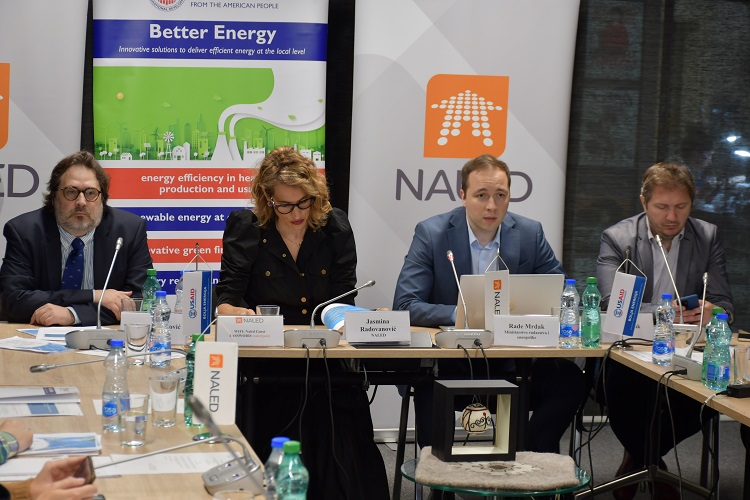
Data from January 2023 to June 2025 show that there has been an improvement in the speed of processing requests related to connection conditions. Despite more efficient procedures compared to previous years, holders of public authority in the energy sector still do not rank among the 20 most efficient institutions. Instead, most of them remain near the bottom of the list, said Jasmina Radovanović, Lead Adviser for Property and Investments at NALED.
She explained that a clear positive trend is visible thanks to digitalization and improvements in the work of distributors. As a result, the average number of calendar days required to process requests for issuing conditions for design and connection has been reduced by more than one third, to 8.2 days. This is particularly significant given that, according to the World Bank’s former Doing Business Report for 2020, the same procedure required as many as 28 days. She also pointed out that positive indicators for this year include the fact that holders of public authority in the energy sector have reduced delays in average request processing compared to the average of all observed institutions. They now lag behind by 1.2 days, compared to a lag of 3.2 days in the previous year.
There is still room for improvement, which is why one of the long-standing recommendations in NALED’s Grey Book, addressed to several ministries, is to improve the procedure for connecting to the electricity distribution network through amendments to regulations and the simplification of procedures. This would speed up the overall process and reduce costs, which is crucial for investors.
NALED has been advocating for several years for the establishment of a special body within the Electricity Distribution of Serbia and other holders of public authority, namely a service users’ panel, as a mechanism for advisory engagement of citizens, businesses and civil society with organizations and companies that perform activities of general interest. This is essential for improving business conditions and attracting new investments. Such panels have proven to be effective mechanisms for identifying problems and proposing solutions to improve administrative procedures. Following the example of the Electricity Distribution of Serbia, a service users’ panel could also be established within Roads of Serbia, the Republic Geodetic Authority and other holders of public authority, Radovanović concluded.