[Nedeljnik] Five Years of StarTech: How an Innovation Ecosystem Is Being Built in Serbia
In the domestic public discourse, innovation is still often perceived as something that happens elsewhere – in Silicon Valley, Berlin, or Tel Aviv. This perception is based on the assumption that innovation is an exclusive product of large markets, strong institutions, and substantial budgets, while the local context is relegated to a peripheral role. However, five years after its launch, the experience of the StarTech program increasingly refutes this assumption with concrete facts and results.
StarTech emerged at a time when the domestic innovation ecosystem was fragmented: the state was developing isolated support measures, the private sector largely viewed innovation through the lens of short-term interests, and cooperation between business and the scientific community remained sporadic and often merely declarative. The program offered a different model – not as a replacement for existing policies, but as a platform that connects key stakeholders.
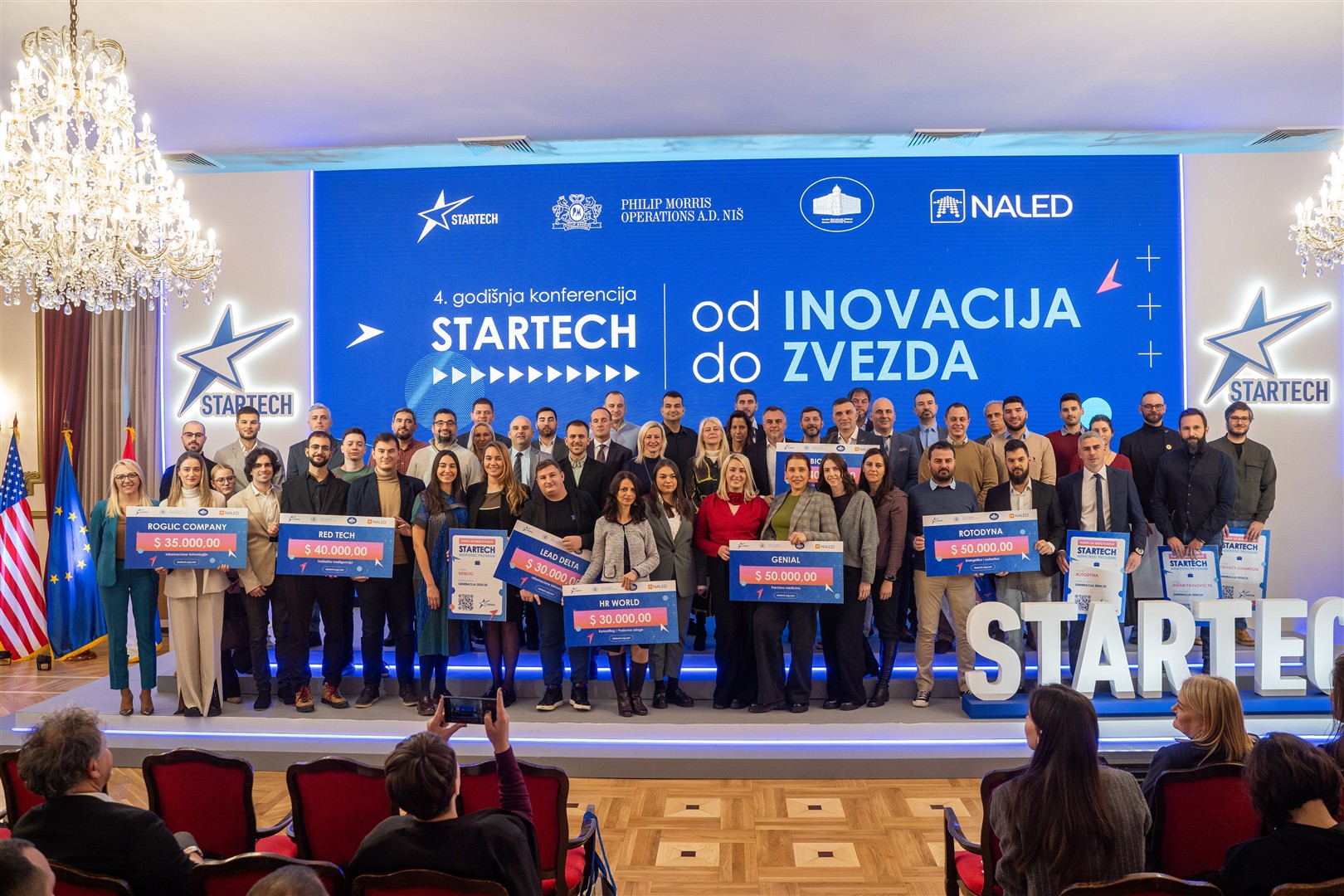
What makes StarTech unique is the fact that it is the first and largest initiative in Serbia dedicated to innovation and technological development to be fully financed by a single private company. The project is funded by Philip Morris International, which has invested eight million dollars to date, and is implemented by NALED in cooperation with the Government of Serbia. Such collaboration represents a precedent in the domestic innovation ecosystem. Even more importantly, project funds are not directed exclusively toward grants, but also toward mentoring support, institutional dialogue, and improvements to the regulatory framework – elements without which innovation can hardly survive beyond the pilot phase.
Over the course of five program cycles, more than one hundred innovative projects and teams have been supported. Their technologies and products are now present in nearly thirty markets, from the European Union to the United States and the Middle East. Behind these figures, however, there is not a linear story of rapid growth, but rather a process of learning, adaptation, and work under conditions that were often far from ideal. Administrative procedures did not always keep pace with technological change, the legislative framework lagged behind practice, and the domestic market – although limited in size – became a testing ground for ambitions that were international from the very beginning.
One of StarTech’s key characteristics is also reflected in the diversity of fields from which the supported innovations originate. In addition to expected software and digital solutions, a significant number of projects include hardware products, medical preparations, biotechnology, agriculture, and advanced industrial solutions. This range clearly shows that Serbia’s innovation potential does not rest solely on the IT sector, but also on knowledge and skills that can be translated into concrete, market-validated products with real-world application.
Alongside direct support to innovators, StarTech systematically works to improve the environment in which these innovations emerge. Through the Innovation Grey Book, more than seventy recommendations have been formulated to remove administrative and regulatory barriers. Although only part of these recommendations has so far been fully or partially implemented, such often invisible shifts form the foundation of a sustainable innovation ecosystem. Simplified procedures for importing research and development equipment, improvements in intellectual property regulation, or opening dialogue on the taxation of freelancers may not attract wide public attention, but they directly affect innovators’ ability to turn ideas into sustainable businesses.
One of the program’s longer-term effects is also evident in the accelerated connection between the scientific community and the business sector. More than eleven teams originating from faculties and research institutes have gone through StarTech, signaling a clear change in relations between these two sectors. Instead of general debates about “untapped potential,” concrete mechanisms of cooperation are emerging – industrial PhDs, technology transfer, and startups born within the academic environment.
The international recognition StarTech received in 2022, when it was named the national winner of the European Enterprise Promotion Awards and reached the finals among 39 countries, further confirms that this approach goes beyond local relevance. More importantly, this recognition sends a message that Serbia can be recognized as a country that builds innovation systematically, rather than relying solely on isolated success stories.
The key question for the period ahead is not whether Serbia has innovative people – that has already been proven – but whether there is social and institutional readiness to develop this model in the long term. Lasting innovations do not emerge overnight, but once they take root, they have the potential to permanently change the structure of the economy and the way a society thinks about development.
If StarTech remains an exception, it will be a missed opportunity. If, however, it becomes a model that is further developed and adapted, it could mark the beginning of a deeper transformation – one in which competitiveness is not based on cheap labor or short-term investments, but on knowledge, partnerships, and long-term confidence in domestic capabilities.
Half a Million Dollars for 12 Domestic Innovations
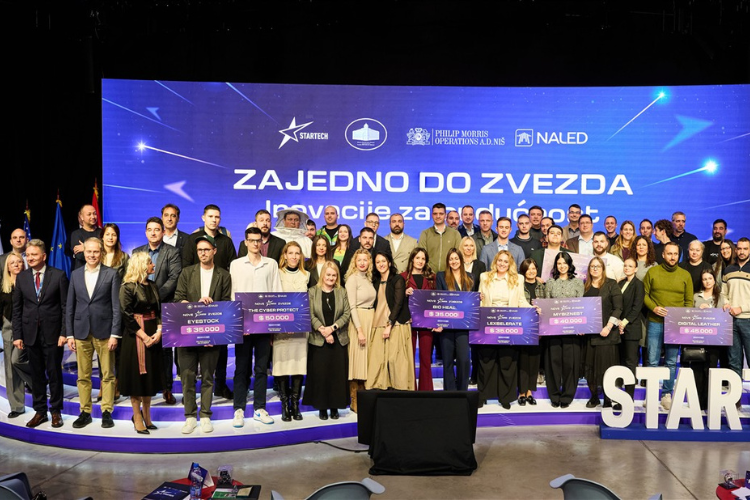
In December, the StarTech program secured an additional half a million dollars in non-repayable grants for 12 of the most promising domestic innovations, as part of its fifth cycle supporting the development of technological solutions and the digital transformation of Serbia’s economy.
The awarded solutions span a wide range of innovations: from an application that helps people with disabilities navigate urban spaces more efficiently, through an AI platform for risk assessment in the automotive industry and an advanced X-ray system for detecting contaminated food, to an organic treatment against varroa mites in bees and a digital inventory management tool for the hospitality sector. The recipients also include solutions for automating GDPR compliance, smart parking reservations, an AI system for detecting cyber threats through gamification, and a digital fitness platform designed for the elderly.
Grant recipients include the teams Bioheal and Peasy, as well as the companies Clean Code Solutions, Digital Leather, Digital Radiography Technologies, Eco Hive, Eyestock, Lexelerate, Gama Point, The Cyber Protect, Wersirius, and Younger.
The text was published in the New Year’s edition of Nedeljnik and is also available via link.