European Commission’s Report on the Business Environment: Digitalization Advances, Parafiscal Reform Expected
In the European Commission’s latest Serbia Progress Report, within the section on economic criteria, the Commission notes that the business environment in our country continues to be burdened by excessive bureaucracy and parafiscal charges, as well as limited efficiency and transparency of public administration and inspection authorities. On the other hand, Brussels highlights improvements made by relevant institutions in areas such as green and social public procurement, digitalization, and the enhancement of eServices for citizens and businesses.
Political circumstances and the shrinking space for civil society, according to the latest EC assessment, make it more difficult to improve the regulatory framework. Without public-private dialogue between the state, the business sector and civil society, significant progress in removing administrative barriers and boosting the competitiveness of the domestic economy on the European market cannot be expected. These are the areas NALED has been working on since its founding.
“For almost every issue Brussels identified in the field of business environment and competitiveness, NALED proposes solutions and provides direct support in implementation. This includes parafiscal reform through ePayments, eSick Leave and eHealth Records, as well as the application of ESG standards and securing subsidies and grants for small businesses and innovators. Many recommendations from the EC report, particularly within Cluster 3, align with what we advocate and monitor through our Grey Book and the Regulatory Index of Serbia,” says Ana Ilić, Director for Good Governance and Projects at NALED.
The European Commission assesses that Serbia is at a “moderate to good” level of preparedness in the area of taxation, but emphasizes that parafiscal charges and hidden taxes remain one of the main drivers of the shadow economy. The good news is that this issue could finally be resolved as early as next year, after more than a decade of advocacy by the business sector.
“We expect 2026 to be key for introducing electronic payment for more than 2,000 fees and charges. This will ensure full transparency of non-tax levies and create conditions for eliminating duplicate or excessive parafiscal charges. Due to its importance for businesses and citizens, this recommendation has been included in Serbia’s Reform Agenda, as part of the EU Growth Plan for the Western Balkans,” Ilić told NALED Bulletin.
In the area of social policy and employment, Serbia is considered moderately prepared. Modernizing the Labour Law and recognizing new and flexible forms of work would certainly contribute to better results. Measures to support social entrepreneurship are also needed. Civil society has been advocating for years for the abolition of VAT on food donations close to their expiration date, which would support social entrepreneurship and significantly reduce food waste. Including the social component in the work of both the private and public sectors as an ESG element was a focus of NALED’s activities during the previous “Year of Equality.”
“We are pleased that the Commission acknowledged progress in public procurement through the introduction of green and social criteria. This was achieved with the support of the Responsible Management Project implemented with support from Sweden. The share of green public procurement in Serbia has tripled in only three years, rising from 1.94% to 6.92%. We see that such measures are delivering results, and this is why we will continue advocating to increase the number of procurement procedures in which green criteria are mandatory, as well as to introduce procurements with mandatory social elements that support social enterprises and socially responsible bidders who serve marginalized groups,” Ilić concludes.
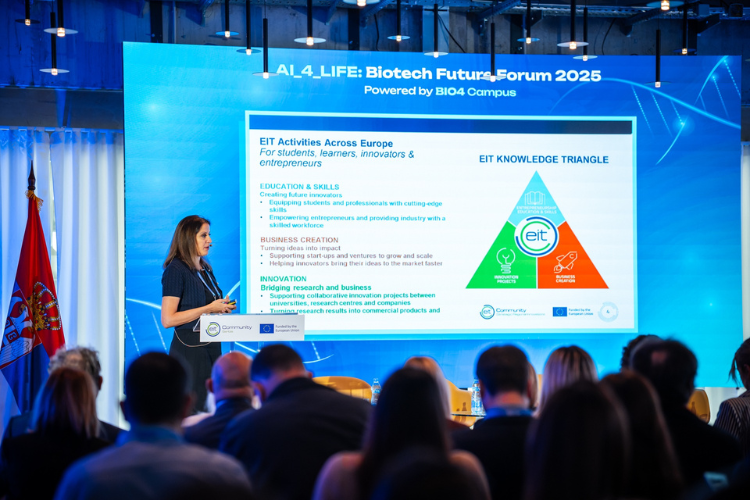
She adds that in July this year, NALED became the EIT Community Hub for Serbia, serving as a contact point for European Institute of Innovation and Technology programs worth three billion euros. These programs are intended for scientists, startups and entrepreneurs for innovation development and technology transfer.
“Platforms such as the EIT Hub, ESG Hub and NALED’s recently established Councils for Sustainable Energy and Small Businesses are effective mechanisms that can help the domestic economy become more competitive and integrate into sustainable supply chains in the coming period,” Ilić says.
NALED will continue to actively monitor and support the EU integration process in areas relevant to improving the business environment. This includes field work, connecting the state, business sector and civil society, as well as institutional engagement as part of the Program Council of the National Convention on the EU, where it coordinates the Working Group for Chapter 16 on taxation policy. Starting this year, NALED also participates in the Cross-Sectoral Working Groups for the Reform Agenda, where it leads the Subgroup for Business Environment and Private Sector Development.