Science as the Starting Point for Innovation
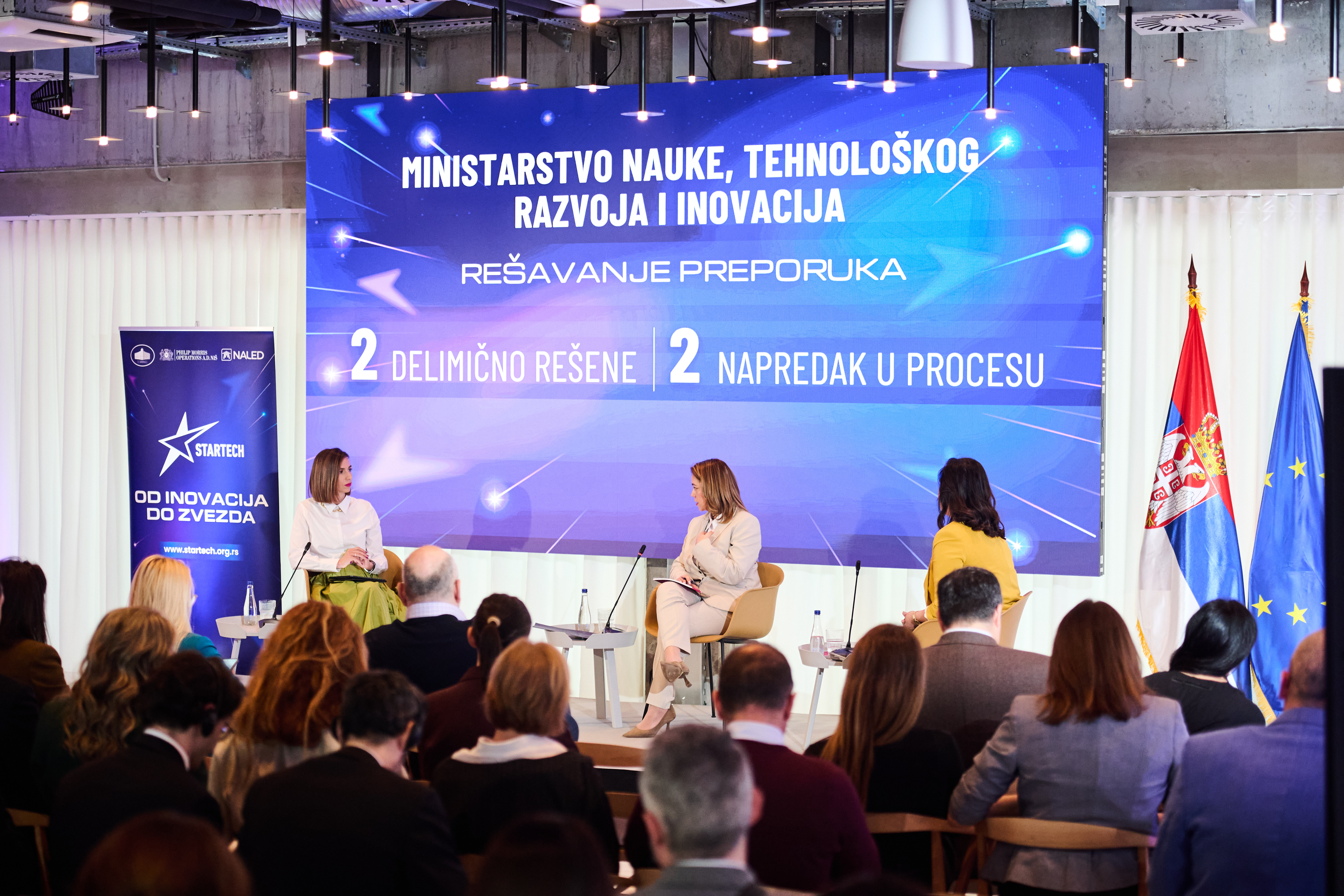
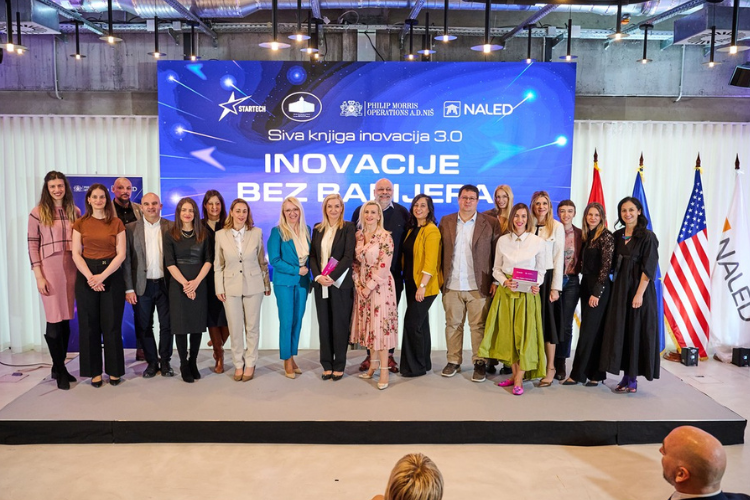
Greater investment by the private sector in research and development, industrial PhDs, and stronger links between scientific institutions and companies were highlighted as some of the key priorities during the panel discussion held as part of the event “Innovations Without Barriers,” where the third edition of the Grey Book of Innovation was presented.
Serbia currently allocates around 0.94% of its GDP to research and development, with the private sector contributing only about one-third of total investment. The Reform Agenda foresees increasing this share to 50% by the end of 2026.
As stated by State Secretary at the Ministry of Science, Technological Development and Innovation, Marija Gnjatović, support for research is available through programs such as the Innovation Fund, the Science Fund, and international projects like SAIGE, but it is important to further strengthen capacities for their implementation.
“It is necessary for the scientific research community to understand the importance of cooperation with the business sector, both for its own development and for the development of the country. The transition from basic to applied research and participation in projects with industry is not a simple process and requires additional knowledge and support models,” Gnjatović said.
The importance of strengthening institutional capacities and developing skills in the areas of technology transfer, intellectual property, and commercialization of research was emphasized. The SAIGE project, through which around 20 scientific institutes have received support, was highlighted as an example of good practice.
Ivana Stefanović, Portfolio Manager at Abela Pharm, explained that this cooperation is an essential element of long-term development for businesses, adding that the company already collaborates with several scientific institutions, resulting in more than 40 research studies. Partnerships have been established with the Faculties of Pharmacy in Belgrade and Novi Sad, as well as with the Faculty of Technology and Metallurgy.
“For us, cooperation with the scientific community is of strategic importance, as it enables us to validate ideas and develop innovative solutions aimed at improving patient health. Through joint efforts, we have enhanced the efficiency of our products and developed innovations that position us today as leaders in certain segments,” Stefanović said.
Public sector funding still dominates the structure of R&D investment, while one of the goals of the Reform Agenda is to increase private sector participation through new programs and incentives. Industrial PhDs were highlighted as an important mechanism for improving cooperation, as they are expected to provide companies with easier access to research talent while offering young scientists the opportunity to start their careers by working on real market challenges.
“Industrial PhDs are an effective way to connect science and industry from the very beginning of a researcher’s career. In this way, we simultaneously strengthen company capacities and improve the quality of domestic science by addressing real-world problems,” Gnjatović noted.
The panel concluded with remarks by Irena Đorđević Šušić, Head of the Innovation and Entrepreneurship Unit at NALED, who emphasized that further progress requires following examples of good practice and keeping in mind the potential of small and medium-sized enterprises, which make up 95% of the domestic economy, in the field of innovation and cooperation with scientific institutions.