What Is Recorded Is Ours: Serbia’s Generational Opportunity to Regulate Property Rights
Serbia is facing a generational opportunity to finally regulate property rights over real estate. Perhaps for the first time ever, given that Ottoman title deeds, the socialist concept of social ownership, and transitional privatization did not replace one another in Serbia but instead coexisted in parallel - adding layer upon layer of challenges to the establishment of the rule of law and a market economy. This legacy continues to hinder our development. The figure of 4.8 million properties that are not registered in the Real Estate Cadastre in a way that identifies the factual owner as the legal holder of ownership rights is known to almost every citizen in the country. What is less well known is that there are municipalities in Serbia where the number of properly registered properties is half the number of those affected by some form of legal irregularity.
In recent months, the state has placed the registration and recording of property rights at the center of its priorities, recognizing it as one of its most important projects.
It is important to immediately clarify a widespread misconception: this law does not legalize buildings. The essence of its provisions is not to resolve urban planning issues, but to register ownership rights over real estate in cases where official records have for years failed to reflect the actual situation on the ground.
A vast number of citizens have been using buildings for decades without formally recognized ownership rights. Such property, although physically existing and in use, remains “invisible” in legal terms. Property without a registered owner cannot become active capital – without registration there are no loans, no investments, no serious spatial management, nor long-term development planning. The issue of fairness and equal treatment of all citizens is further compounded by the fact that unregistered properties are often not recorded by tax authorities at all, or only partially, based on a fraction of their actual surface area. Clear identification of owners and proper registration of property form the basis for fairer taxation, stronger local budgets, and improved local infrastructure and public services.
The new law enables citizens who register ownership rights in the Real Estate Cadastre to dispose of their property – to use it as collateral, connect it to public utility infrastructure, and invest in improving their buildings. This is one of its greatest values: property becomes a resource.
A particularly important step forward is the digitalization of the procedure. This not only simplifies the process for citizens, but also introduces a higher level of accountability into the system.
Between 8 December 2025 and 5 February 2026, citizens may submit applications, either independently or with the support of local self-governments. All relevant information, guidelines, and technical support are available at svojnasvome.gov.rs.
Alongside addressing inherited problems, the state will have an obligation to effectively prevent new illegal construction. To this end, it will rely on regular aerial surveys, as well as the possibility for the state to register itself as the owner of illegally constructed properties.
Every illegal building leaves long-term consequences for spatial planning, infrastructure, the legal system, and the community. If this law is implemented responsibly and consistently, with clear oversight and political will, it can represent a turning point in regulating property relations and a significant step toward greater legal certainty and sustainable development in Serbia.
It would be a great loss – and a missed generational opportunity, as highlighted at the outset – if this broad social support for resolving property-rights issues related to real estate were not used to take a decisive step beyond merely registering buildings constructed without the appropriate permits. It is essential to promptly begin resolving the issues affecting nearly three million properties that are not illegal but remain in a state where factual owners are effectively prevented from registering ownership rights. If this process is opened and approached in an organized manner, with adequate resources, it will unlock development opportunities for future generations that were denied to those before them.
Related Content
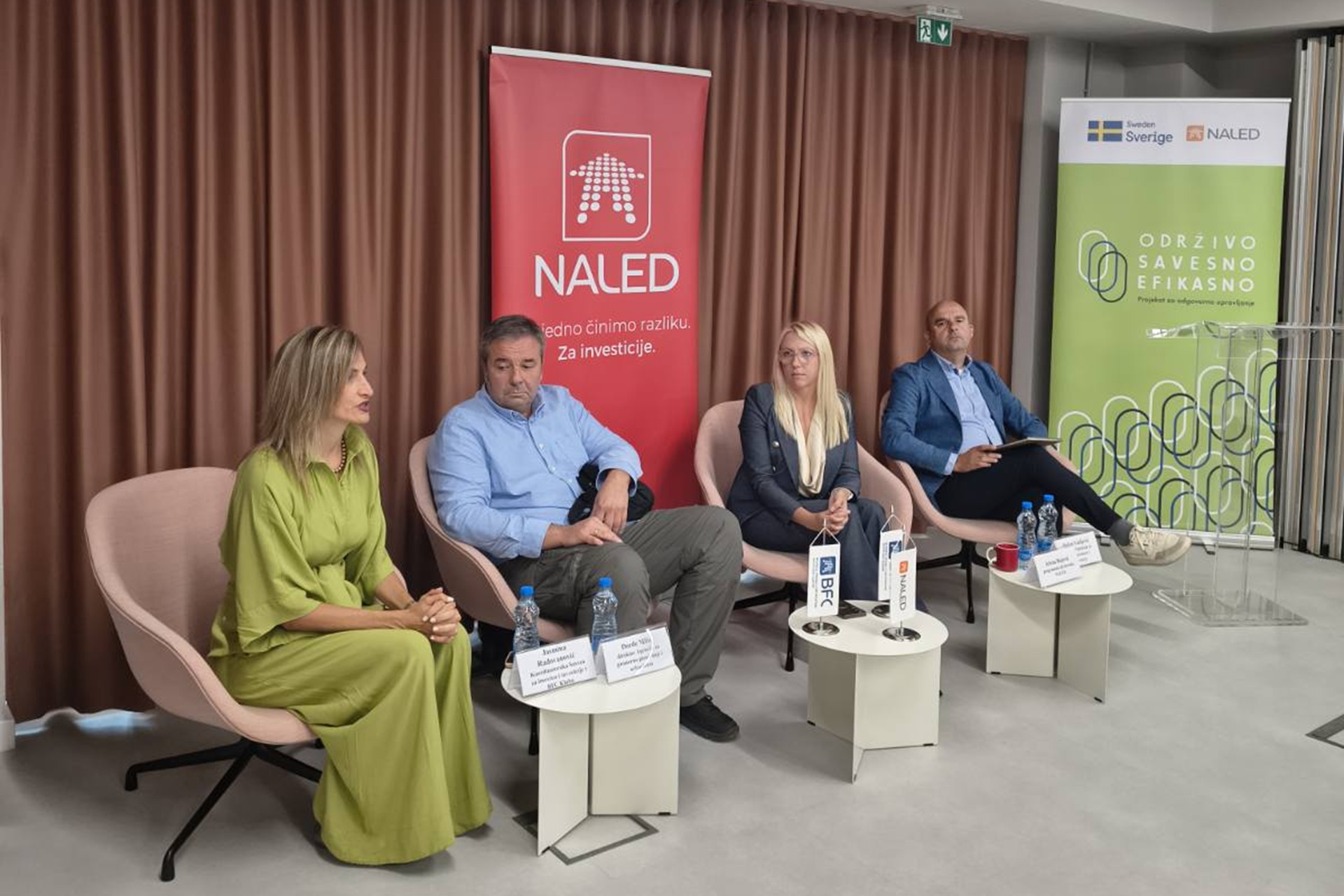
A session of the Property and Investment Alliance and the BFC Club was held
30.09.2025
The draft Bill on Special Conditions for Recording and Registration of Property...Read more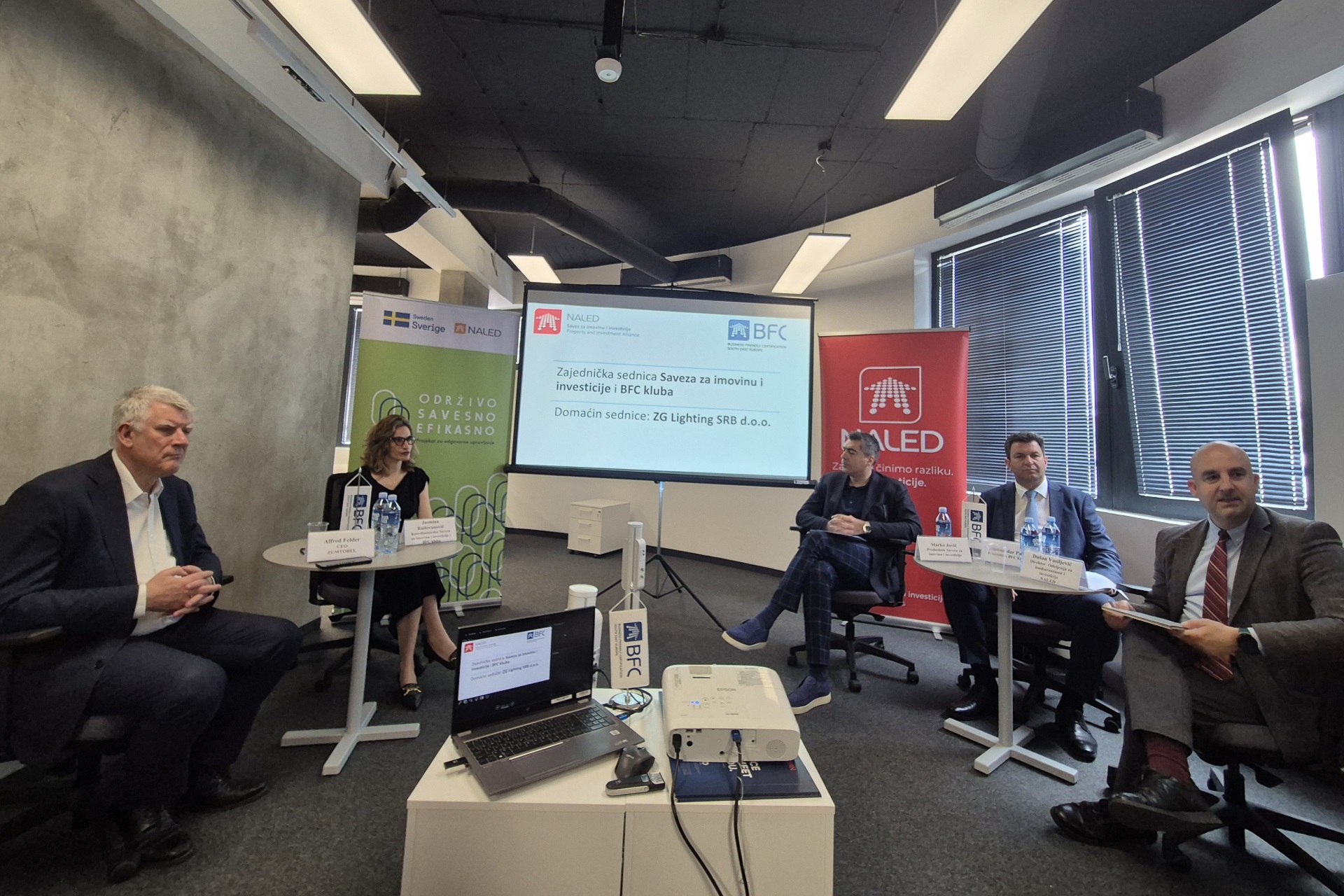
Property and investment Alliance ready for the new Government
17.04.2025
NALED, together with its property and investment Alliance, is ready to welcome...Read more
Why “legalization” now has a chance
14.12.2025
The adopted Bill on Special Conditions for Recording, Registration of Rights to Real Estate introduces a digitalized and simplified...Read moreThis website uses cookies to ensure the best user experience. By continuing to browse the site, you consent to the use of cookies.
CONTINUE LEARN MORE