GROWTH4BLUE: The Blue Economy Is Not Just the Sea – It’s All Around Us
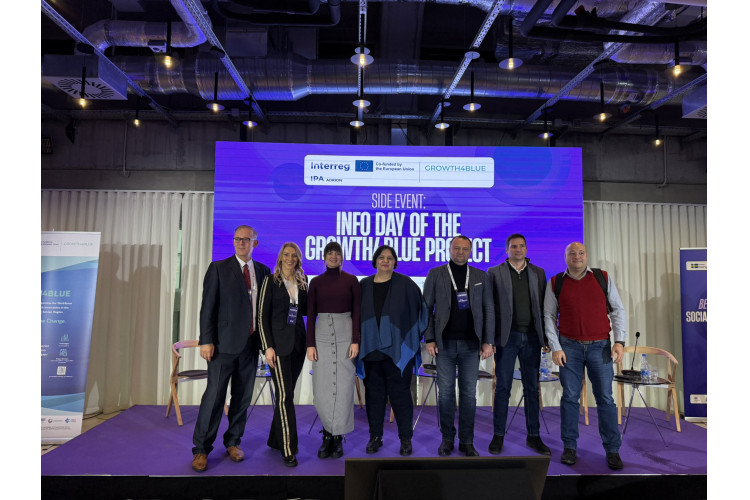
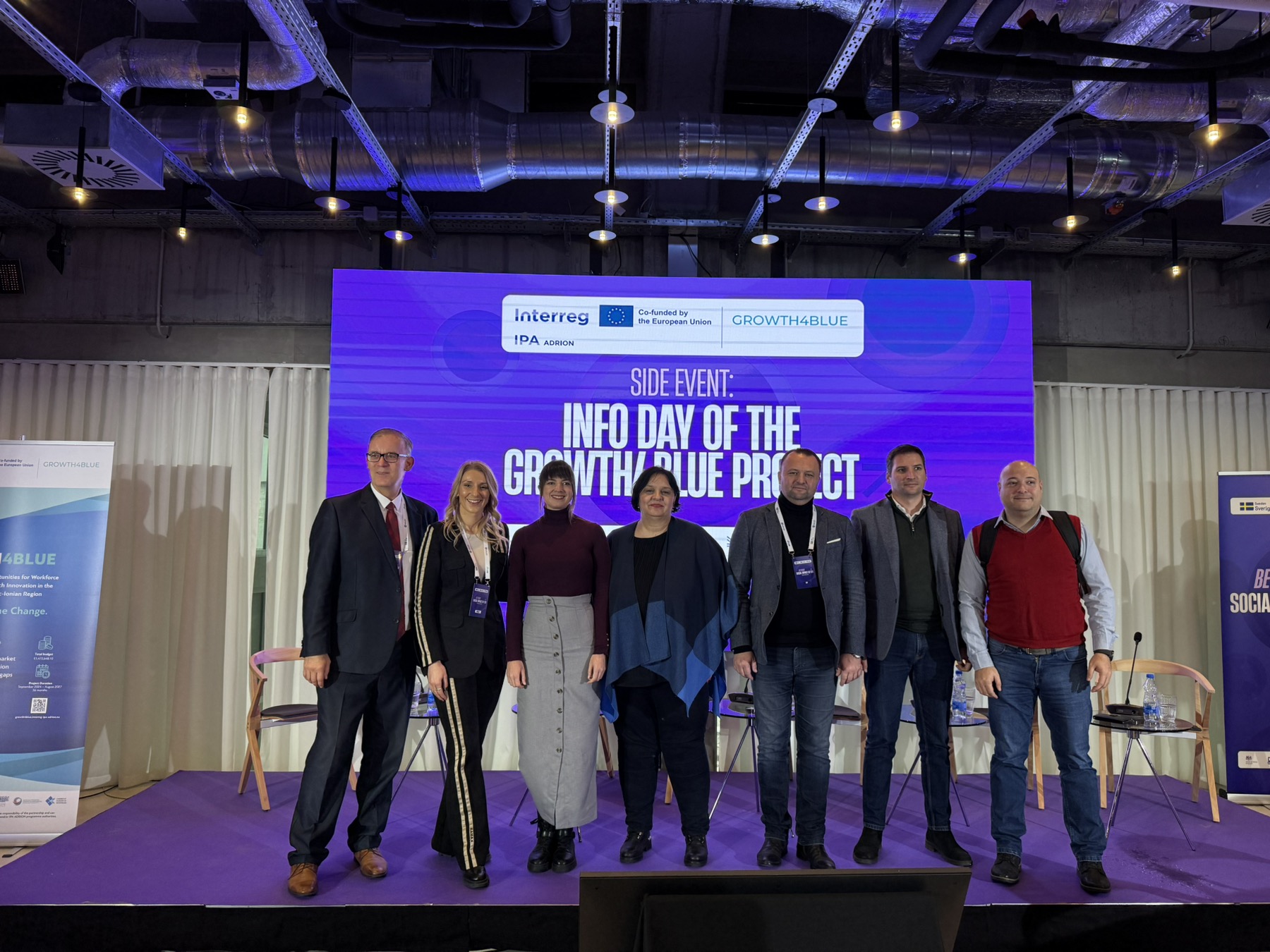
At the info day held as part of the regional GROWTH4BLUE project, representatives of chambers of commerce and organizations from Slovenia, Montenegro, North Macedonia and Serbia highlighted the importance of developing an innovation-driven blue economy, as well as the need to align education systems, the labor market and industry in order for the region to reach its full potential.
The GROWTH4BLUE project is funded by the European Union through the Interreg IPA Adrion Programme and brings together partners from Greece, Italy, Slovenia, Montenegro, North Macedonia and Serbia. Project activities in Serbia are implemented by NALED.
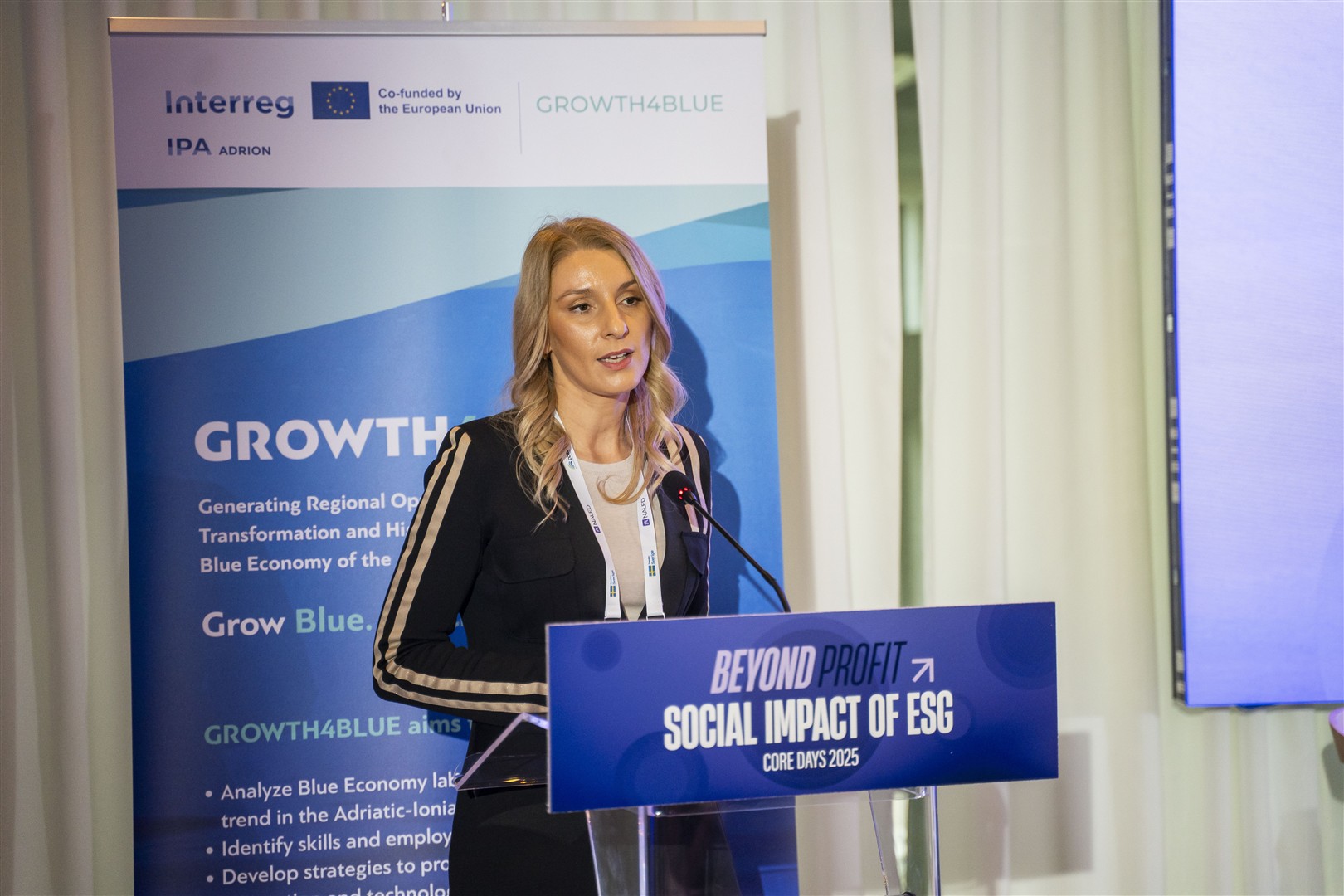
“At its core, GROWTH4BLUE aims to bridge the gap between labor market needs and the available workforce in sectors such as fisheries and aquaculture, shipbuilding, port economy, river and lake tourism, and renewable energy sources, while fostering technological excellence and green innovation,” said Marija Janjić, Project Manager at NALED, at the opening of the event.
Robert Rakar, Director of the Chamber of Commerce of Primorska, emphasized that countries with vast river basins and waterways, such as Serbia, also have significant potential in the blue economy sector.
“Your lakes and rivers – the Danube, the Tisa, the Sava – represent kilometers of shoreline. The blue sector is interdisciplinary; it is not made up only of fishermen and shipbuilders, but also of farmers supplying tourism, glass industry suppliers and many others. Many companies are not located by the sea at all, yet they are still part of the blue economy,” Rakar said.
He also pointed to the challenge of lacking a clear methodology for measuring the blue economy’s contribution to GDP, as there is still no single, unified definition of what this sector encompasses.
Slovenia has only 34 professional fishermen today, and its once-strong fish processing industry has nearly disappeared. “The education system must teach young people that the sea is not only for swimming. In the blue economy, work takes place 365 days a year, it is physical, it involves working with people, and it is a craft that needs to be nurtured,” Rakar added.
Tanja Radusinović, representative of the Chamber of Commerce of Montenegro, noted that port and transport infrastructure are well developed, but that the blue economy in Montenegro is still predominantly associated with tourism.
“We work with fishermen through a number of EU-funded projects and are trying to reduce the gap between imports and exports. We teach shellfish farmers to make souvenirs and introduce circularity into fisheries,” Radusinović stated.
She identified the lack of qualified labor as a major issue, due to dependence on imported workers in tourism and construction. The Institute of Marine Biology and the Faculty of Maritime Studies are introducing specialized programs to bring these fields closer to young people.
Dragan Pehčevski from the Union of Chambers of Commerce of North Macedonia added that the definition of the blue economy has not yet been fully established, but explained that their approach is based on four pillars: the state, the private sector, civil society and academia.
North Macedonia’s blue economy includes lake tourism, hydropower, fisheries, the agri-sector - particularly due to its impact on river ecosystems - as well as services and procurement linked to tourism.
“The agri-sector is the largest polluter of river waters and this is where we must focus. Tourism must be environmentally sustainable. At the same time, digitalization can support the workforce - receptionist and waiter are standard occupations, but how can we make them ‘more blue’?” Pehčevski asked.
He added that the country is facing significant migration challenges: “Some 600,000 people have emigrated from North Macedonia. A major issue is the mismatch between educational programs and labor market needs.”
Ivana Kostić, representative of the INNOVABLUE project, emphasized that “everyone has access to the sea, because through rivers we all reach it,” while placing special focus on innovation. The INNOVABLUE project, also funded through the Interreg IPA Adrion Programme, focuses on developing experimental innovation environments in the field of the blue economy, so-called living labs.
“In Serbia, the INNOVABLUE project is led by the Innovation Center of the Faculty of Mechanical Engineering. We have a large number of startups, companies and research institutes working in areas relevant to the blue economy. All this expertise will be used to establish a living lab within the INNOVABLUE project, where we will test innovations in real-life conditions,” she concluded.