Who Are the Top Five Largest Donors in Serbia?
Over the past twenty years, the European Union has provided two to three times more funding through non-refundable grants than all other international partners combined, with annual amounts ranging between 200 and 300 million euros. This makes the EU by far the largest donor in Serbia. Unlike the European Union, which remains a stable development partner and has even increased the availability of grant funding, most bilateral and multilateral partners have reduced the scope of their financial support over this twenty-year period or have discontinued it altogether, as in the case of Austria or the United States. This is an expected trend that will continue as Serbia advances on its European path. The availability of European funds is increasing, while other partners are reducing their development assistance and redirecting it toward less developed countries.
Last year, following the European Union, Germany, Switzerland and Sweden stood out as the most significant partners, each allocating tens of millions of euros annually. Norway and other bilateral donors, as well as international organizations such as United Nations agencies, the OSCE and the Council of Europe, contribute significantly smaller amounts of grant funding, but nevertheless represent important support for reforms, European integration and socio-economic development.
According to Ana Ilić, Director of the Department for Good Governance and Projects at NALED, unlike other donors that focus on a limited number of areas in line with their own development strategies, the EU is the only donor that supports virtually all segments of social life in Serbia.
The largest share of funding is invested in infrastructure, namely energy, transport and environmental protection, as well as in socio-economic development, innovation, digitalization and healthcare. A particularly important area is the rule of law, which includes judicial reform, human rights, media freedom and institutional strengthening. All of these priorities align with national objectives, NALED’s recommendations, and the needs of citizens and the business community.
Another very important segment of investment relates to strengthening regional cooperation, which the EU has directly supported through the Western Balkans Growth Plan, worth six billion euros, as well as through cross-border cooperation projects aimed at improving the quality of life of local populations and reducing territorial economic and social disparities.
NALED is an active participant in several such EU projects. In Subotica and three other border municipalities in Croatia, work is underway on establishing solar power plants on 30 public buildings, installing smart public lighting and setting up 13 smart bus stops. At the same time, in southern Serbia, in Novi Pazar and Tutin, as well as in municipalities in Montenegro, a project focused on developing primary waste separation and local waste collection has recently been completed. On that occasion, the EU also donated 1,500 bins for proper household waste sorting and one waste collection truck to the public utility company in Novi Pazar, Ilić explained.
Taking into account the importance of environmental protection and alignment with the EU acquis under Chapter 27, NALED provides technical assistance to the competent ministry in establishing a regional waste management system for the City of Novi Sad and seven surrounding municipalities. At the same time, through the Growth4Blue project and cooperation with partners from Greece, Italy, Slovenia, Montenegro and North Macedonia, NALED supports the development of the blue economy by aligning labor market needs with available skills in the fields of fisheries, shipbuilding, and river and lake tourism.
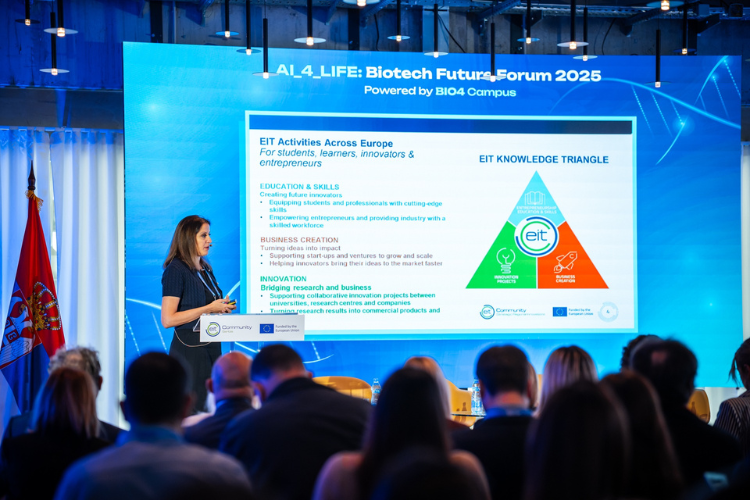
In 2026, we should continue connecting our economy with the European one through the development of sustainable and responsible business practices, decarbonization, sustainable trade and the development of innovation. It is important for our economy to make rapid progress in applying European business standards and to make maximum use of the funds available through various European programs. This is an area where we can achieve a significant breakthrough already this year, and NALED, as a contact point for the European Institute of Innovation and Technology, will provide special support to startups, researchers, companies and all those who wish to innovate and offer their innovative solutions and products to the European market, Ilić concluded.