Good news for domestic e-commerce merchants as the NBS confirms the possibility of online foreign currency payments from non-residents
The National Bank of Serbia has confirmed that domestic companies can charge for their products and services in foreign currency when selling online to non-resident customers. This facilitates online business operations, strengthens the competitiveness of domestic e-commerce, boosts exports, and accelerates the integration of Serbia’s economy into global digital trade flows. With this positive opinion issued in response to an initiative by the Small Business Council of NALED, one of the priority recommendations of the Innovation Grey Book has been implemented.
A growing number of companies in Serbia, including startups, sell their products and services to international customers online with the option of digital payment. However, in practice, a problem has arisen at the final stage of the online purchase process. Non-resident customers are often required to pay exclusively in Serbian dinars, even though prices on the website are displayed in both local and foreign currency and the customer has selected payment in foreign currency. This practice leads to cart abandonment at the final step, as customers are presented with an unfamiliar currency during checkout, which can create the impression of fraud.
The issue stemmed from differing interpretations of the Law on Foreign Exchange Operations, particularly Articles 32 and 34, and uncertainty over whether mandatory dinar payments also apply to cross-border online transactions with non-residents. In practice, restrictive interpretations were often applied, limiting the ability to charge foreign customers in foreign currency despite the lack of a clear regulatory basis. For this reason, the Small Business Council of NALED submitted an initiative to the National Bank of Serbia requesting an official opinion to clarify the issue, explains Irena Đorđević Šušić, Head of the Innovation and Entrepreneurship Unit at NALED.
In its official opinion, the National Bank of Serbia confirmed that there are no regulatory obstacles preventing residents from charging non-resident consumers in foreign currency. The place of payment execution is linked to the payer’s bank. When a non-resident initiates a payment through their bank abroad, the transaction is not considered to have been executed in the Republic of Serbia. This confirms that cross-border e-commerce transactions are conducted freely, meaning that payments, collections, and transfers related to current transactions between residents and non-residents can be carried out without restriction. At the same time, the National Bank of Serbia noted that displaying prices in dinars at the final stage of the purchase is not governed by foreign exchange regulations but depends on the policies of the platform and payment service provider.
This is very positive news and an important confirmation for all companies in Serbia that sell their products and services online to foreign customers. The official position that foreign currency payments from non-residents are allowed provides much-needed certainty in business operations. This experience also highlights the importance of continuous and open cooperation between the business community and institutions in resolving practical issues that often arise from differing interpretations of regulations rather than the regulatory framework itself, emphasized Sofija Popara Parmaković on behalf of the Small Business Council of NALED and the Pausal.rs platform.
To realize the expected benefits, this supportive position of the National Bank of Serbia now needs to be implemented in practice. NALED points out that the next step should be the alignment of business policies among banks, payment processors, and e-commerce platforms.
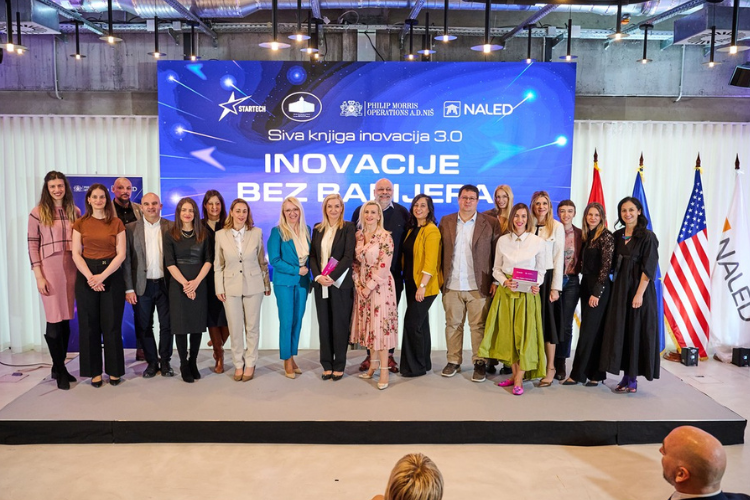
NALED also reminds that the Innovation Grey Book 3.0 has already defined key priorities for the further development of the innovation business environment, where the support of the National Bank of Serbia is of great importance. In addition to this measure, key priorities include regulating crowdfunding, enabling voluntary pension funds to invest in alternative venture capital funds, and simplifying international money transfers for non-residents.
The Innovation Grey Book was published as part of the StarTech project, worth eight million dollars, implemented by NALED and Philip Morris International with the support of the Government of the Republic of Serbia, with the aim of accelerating the digital transformation of the domestic economy and strengthening Serbia’s innovation potential.
Photo: Shutterstock