Clearer Digital Asset Rules Could Make It Easier for Start-ups to Access Funding
Digital assets create opportunities for new models of start-up financing, but clearer regulatory rules are needed for this potential to be realised. Legislative amendments could make it easier for start-ups in Serbia to access capital while providing businesses and citizens with more predictable conditions for investing in innovative companies.
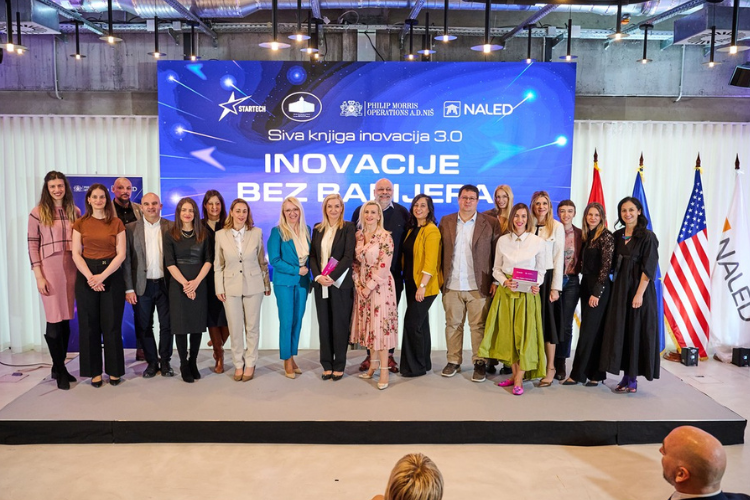
This is supported by six recommendations from the third edition of NALED’s Grey Book of Innovation, a publication developed under the StarTech project. The recommendations address digital asset-related issues and offer concrete solutions for improving their tax treatment and the documentation of recognised expenses, as well as establishing clearer rules for digital tokens, decentralised finance and new financing models.
One of the key recommendations concerns improving the tax treatment of digital assets by ensuring that exchanges of one digital asset for another are not taxed. Instead, tax would be paid when digital assets are exchanged for money, such as dinars or foreign currency. This would link the tax liability to the point at which the user actually realises a monetary gain.
Miloš Praštalo, founder and CEO of MNP Advisory & Accounting and a member of the Presidency of NALED’s Small Business Council, explains that the tax treatment of digital assets could also be improved by shortening the holding period required to qualify for a capital gains tax exemption upon their disposal. Instead of the current ten-year period, it is proposed that the period be reduced to no more than two years, following the legislative approach adopted in Croatia and several other EU countries. As he notes, digital assets should not, by their nature, be treated in the same way as real estate or shares, for which a tax exemption applies to transfers after ten years.
“The recommendations aim to simplify procedures, reduce legal uncertainty and adapt the tax system to new forms of investment and business activity in order to accelerate the flow of capital. This would improve the global competitiveness of Serbia’s start-up ecosystem and reduce incentives for companies to relocate their operations outside Serbia after reaching a certain stage of development,” Praštalo says.
Another recommendation is to introduce a capital gains tax exemption when proceeds from the disposal of digital assets are invested in the share capital of a domestic company or an investment fund. It is also proposed that part of employees’ rewards and bonuses be transferred in the form of digital assets.
“This type of digital asset transfer would only be possible with the employee’s prior consent. Employees would not receive their entire monthly salary in digital assets, but only part of their salary or a bonus,” Praštalo explains.
Digital asset transactions could be further facilitated by enabling the electronic filing of the PPDG-3R form for income generated from digital assets through the ePorezi portal. This would simplify tax return filing for individuals, reduce uncertainty in practice and provide a clearer overview of digital asset transactions. To ensure consistent treatment by the tax authorities, the preparation of dedicated guidance and targeted training for tax inspectors is also recommended.
In the coming period, it will be important to align efforts to improve the Law on Digital Assets with amendments to tax legislation and other regulations so that digital assets can become one of the regulated sources of financing for innovative companies. According to the European Central Bank’s study on consumers’ payment habits in the euro area, the share of citizens who own digital assets increased from 4% in 2022 to 9% in 2024, showing that digital assets are increasingly becoming part of the financial behaviour of citizens and investors.
“If the government recognises the potential of this field and provides appropriate tax incentives and a more flexible regulatory framework, Serbia could assume a leading role in the region and become a hub for the development of innovative products and companies,” Praštalo concludes.