Status of reforms in Serbia: Eight Grey Book recommendations resolved over the past yea
Since the publication of the previous, 17th edition of NALED’s Grey Book, institutions have partially or fully implemented eight recommendations of the business sector for better business conditions, while work has begun on another 15. Although the pace of reforms remains below the previous multi-year average of 12 recommendations, it is evident that it is accelerating again after stagnation during 2024 and in the first half of 2025, when only two recommendations were partially resolved.
What distinguishes the previous reform cycle is more visible progress in implementing the Grey Book’s priorities. Some of NALED’s key initiatives have been carried out, including the introduction of electronic sick leave, which is estimated to reduce administrative costs for businesses by RSD 1.8 billion annually; enabling electronic payment of all fees and charges without the need to submit proof of payment; and establishing a carbon taxation system aligned with the European Union’s CBAM mechanism.
Among the partially resolved recommendations are two more priorities — the introduction of targeted convalidation for determining property rights, and the acceleration of the procedure for legalising illegally constructed buildings, the Svoj na svome initiative, where the resolution of 2.5 million submitted registration applications is expected. In addition, progress has been made in increasing the transparency of bankruptcy proceedings and improving procedures for the construction of telecommunications infrastructure.
In the coming period, some of the initiatives already launched are also expected to be resolved, such as abolishing the obligation to prepare and submit the POPDV form, establishing a single electronic health record, adopting the Programme for the Development of Social Entrepreneurship, and digitalising the field book and the register of agricultural incentives.
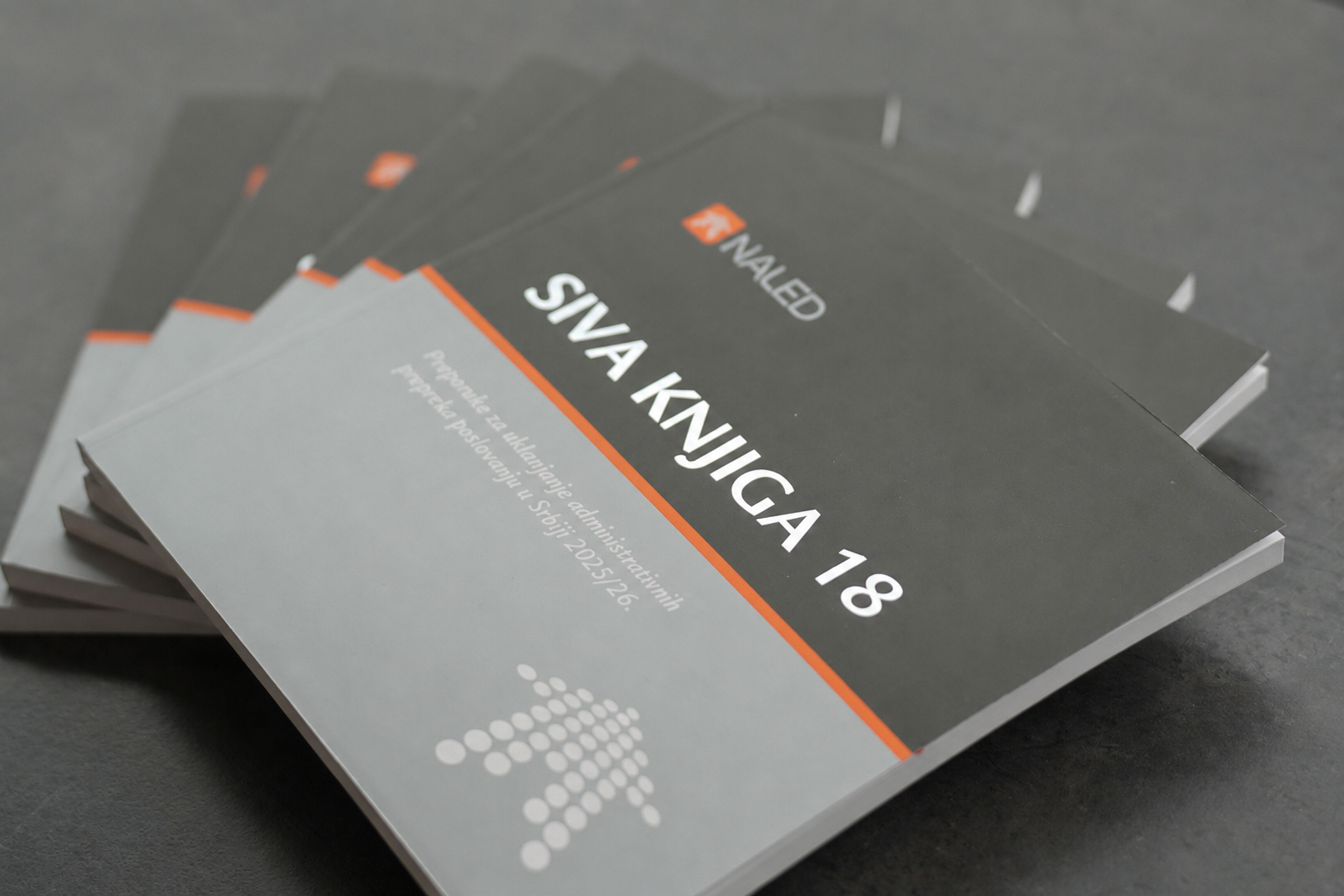
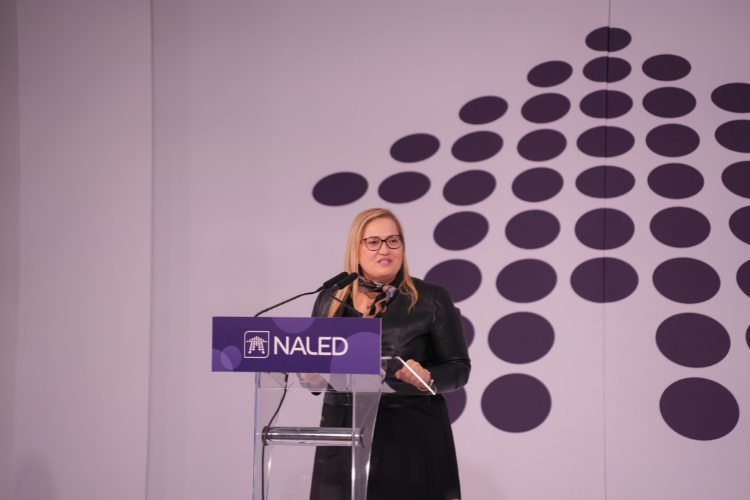
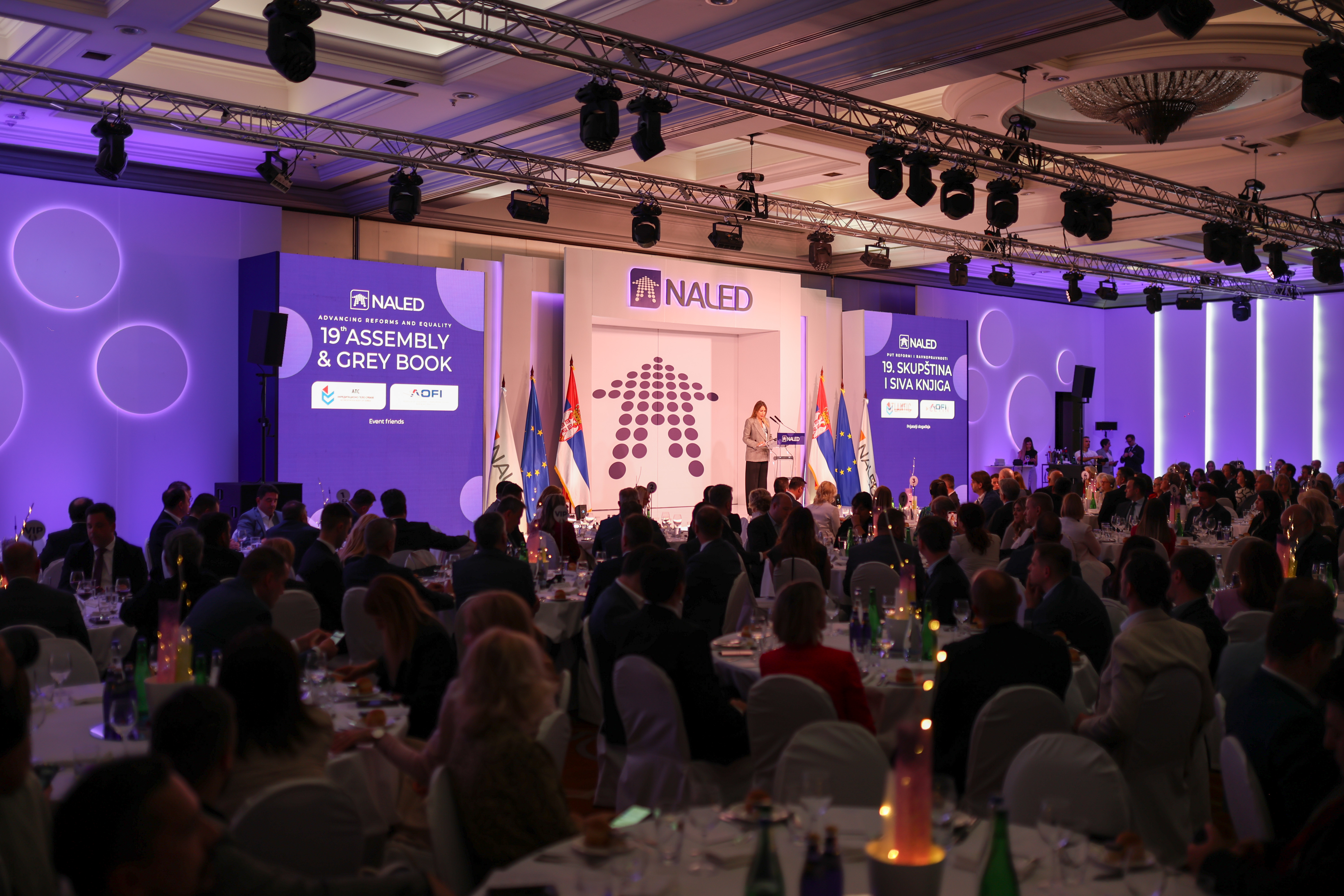
The new, 18th edition of the Grey Book will be officially presented on 18 May at NALED’s Assembly, when a new Managing Board and Supervisory Board will also be elected, to lead the organisation’s reform initiatives over the next four years.
“Over the past 18 years, including this edition, through our Grey Book we have presented almost 350 unique recommendations, more than half of which, namely 177, have been partially or fully resolved. The sector that has implemented the largest number of reforms for better business conditions since 2008 is Finance, which has contributed to resolving as many as 37% of Grey Book recommendations. In second place is Construction with 11%, followed by Labour, Healthcare and the Economy,” said NALED Executive Director Violeta Jovanović, adding that these results confirm the importance of continuous dialogue and cooperation between the public and private sectors.
Grey Book 18 contains 100 concrete recommendations for reducing excessive bureaucracy and improving the business environment in Serbia. Among them, 22 recommendations carry the “EU badge” because of their importance for Serbia’s EU integration, while in this edition, as part of the Snažne i važne initiative supported by the British Embassy in Belgrade, gender-sensitive reform measures have also been highlighted for the first time.