Serbia to Introduce National CO₂ Tax in January: Businesses Demand Clear Rules and Market Protection
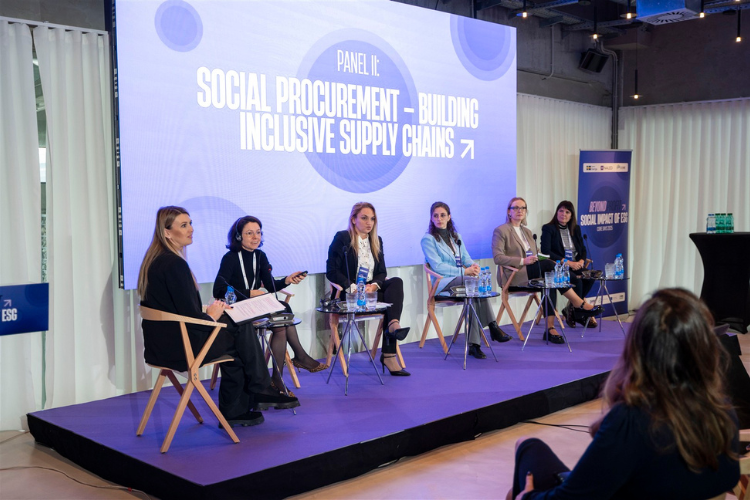
Protection from unfair competition, the establishment of a decarbonization fund, and verification of actual emissions by domestic verifiers are key demands of the business sector affected by the CBAM regulation, it was stated at a panel dedicated to the upcoming introduction of a national CO₂ emissions tax starting January 1.
Marko Muhadinović, Technical Director at Holcim Serbia’s cement factory, emphasized that “people and their competencies are key to the transition,” noting that the company has so far invested 150 million euros in decarbonization in Serbia and expects domestic regulations to follow the European roadmap.
Muhadinović stressed that the key measures in the cement industry include replacing raw materials and fuels, transitioning to renewable energy sources, and clear regulations. He especially highlighted the importance of keeping part of the CBAM revenues in the country and channeling them into industry through a dedicated fund:
“If we want to compete in Europe, that money must stay in the decarbonization sector.”
He also expressed concern about provisions regarding verifiers, pointing out that CBAM requires verification by accredited EU bodies, while the draft domestic law also allows verifiers from exporting countries, which “raises doubts and may deviate from EU regulations.”
Branko Zečević, Director of Metalfer, stated that the company has invested 120 million euros in new technologies and now has one of the lowest emission levels in Europe, but noted that not everyone will be able to transition to new technologies.
“Some countries that cannot make this transition are lowering prices and becoming unfair competition,” Zečević said, adding that global free trade “de facto no longer exists” as all states introduce protection measures for their producers.
“If our market is one of the few that remains fully open, all investments in decarbonization will be in vain if we allow entry to products whose producers are not investing in that transition,” he said, adding that many products from countries outside CBAM will seek new, unprotected markets — including Serbia.
Jovana Joksimović, Assistant Minister in the Ministry of Energy, pointed out that Serbia has been working intensively with the European Commission for the last two and a half years so that the domestic mechanism would be recognized in the EU.
“We successfully secured that carbon taxes in coal-dependent countries, such as Serbia with 60% of electricity coming from coal, are considered aligned with EU policies,” she said.
According to her, Serbia is “the most prepared in the region” because it already has an adopted energy transition plan and climate plan.
Slobodan Minić, member of the Fiscal Council, presented findings of a study assessing the effects of the new system on the economy. He reminded that two-thirds of Serbia’s exports go to the EU and that the domestic economy is energy-intensive, with emissions twice the European average.
“The overall macroeconomic impact will not be dramatic, but some industries will be significantly affected, primarily iron and steel,” Minić said. The impact on cement would be limited because Serbia exports only a small portion of its production.
According to him, the lawmaking process was carried out with minimal involvement of the business sector and civil society, and the Draft Law was received only in October.
“The law seems like an initial step, but we don’t have a roadmap for how it will evolve.”
He recommended that part of the budget be mandatorily reserved for decarbonization programs even without establishing a dedicated green fund:
“When it comes to taxes, budget unity should be preserved; however, we didn’t have to stop where we did. The law currently amounts to a political promise. What could be done — even without a green fund that would break budget unity — is to introduce a provision ensuring that funding for specific decarbonization programs cannot be lower than the expected revenue from these two taxes,” Minić concluded.